|


|
This page contain Norman Lebrecht's CDs of the Week from February 19, 2007 to March 4, 2014. For the latest Lebrecht Weekly, visit here. March 3, 2014 Mieczyslaw Weinberg/Kremerata Baltica
Living in the shadow of his close friend and neighbour Dmitri Shostakovich, the Polish refugee was little known in his lifetime (1919-1996) outside Soviet Russia. But a revival has been stirring these past few years with European and US productions of his Auschwitz survivors’ opera The Passenger and sporadic recordings of variable quality of his instrumental works, among them 27 symphonies. Some consider him the third great Soviet composer, after Prokofiev and Shostakovich. Gidon Kremer has no doubts of his genius. He opens this set with a solo violin sonata, austere and melancholic. Skip that, and you enter a frisky 1950 string trio, followed by a 1949 violin-piano sonatina in which the pianist is the irresistible Tchaikovsky winner, Daniil Trifonov. Written under Stalin’s second Terror Wave in which members of Weinberg’s family were murdered, the works wear a fixed smile and a ferocious concentration. The listener dare not relax. A 1948 concertino for violin and string orchestra is altogether more ingratiating, with an arresting opening melody and busy interplay between soloist and ensemble. It’s a retro near-masterpiece of 1930s rhythms and neo-classical riffs. The tenth symphony, which wraps up the album, is a post-tonal experiment of the late 1960s, daring for its time and place but unchallenging to modern, western ears. The playing quality is top drawer. Weinberg always leaves me wanting to hear more.
February 4, 2014 The Westminster Legacy In the golden age of orchestral recording – the 1950s cusp between mono and stereo – American labels piled into London and Vienna after an aggressive union priced their own musicians out of work. At Abbey Road, players worked thirty days on the trot, three sessions a day, to feed a burgeoning market for classical music. In Vienna, the Philharmonic (exclusively contracted to Decca) performed under six different names for other labels. Westminster was one of the busiest of these producers and its arhives have been virtually unavailable for the past quarter-century, since the digital dawn. This overdue compilation of 40 CDs is filled with uncollected glories, some half-remembered, others unknown. A Vienna Mozart Requiem conducted by the cerebral Hermann Scherchen, with Sena Jurinac as soloist; Clara Haskil playing the Mozart D minor concerto and the very young Daniel Barenboim the E-flat major: treasures beyond the stuff of dreams. Pierre Monteux leading Beethoven’s ninth in London with Elisabeth Soderstrom and Jon Vickers; Adrian Boult conducting The Planets in Vienna; Hans Knappertsbusch interpreting Bruckner; debut discs by the Amadeus Quartet and Julian Bream; the two best Czech quartets coming together in Mendelssohn’s Octet. This is fantasy casting of an almost unimaginable pedigree and few today are aware that these recordings even exist. There are, inevitably, a few period duds in the box, but even these mishits – Scherchen Conducts Music for Multiple Orchestras – proclaim an idealism that we’d write off as quixotic if we didn’t, finally, blessedly, have proof of their existence. Where on earth to begin?
January 6, 2014 André Tchaikovsky: Piano concerto We now have piano concertos by three composers called Tchaikovsky. The first is written in B flat minor, a dark key that others mostly shunned. The second is by Boris Tchaikovsky, a student and kindred spirit of Dmitri Shostakovich. The third is like nothing you’ve ever heard before. In the first place, its composer’s name is not really Tchaikovsky. That was a name picked by his grandmother to pluck him from the Warsaw Ghetto and keep him alive, hidden in a closet, until the Nazis were defeated. The boy, a pianist and composer, was an unsettled soul who lived mostly in England until his death of cancer, aged 46, in 1982. For many years he was known as the man who left his skull to the Royal Shakespeare Company for use in the gravediggers’ scene in Hamlet. Last summer, however, his opera The Merchant of Venice received a triumphant premiere at the Bregenz Festival and the third Tchaikovsky (too late to change the name) is now firmly back in play. His piano concerto, written for Radu Lupu in the late 1960s, reflects the swirling currents of Sixties London. Atonal and dramatic, it is austere only in its frugality – not a note out of place. A sultry mischief, alternately angry and amused, pervades the work. The music engages the listener with a powerful personality and an infectious musicality. We need to hear this concerto at the BBC Proms to sample its exciting potential. The performers here are Maciej Grzybowski and the Vienna Symphony Orchestra, conductor Paul Daniel. André Tchaikovsky’s extraordinarily articulate diaries, also published this month by Toccata, recount a dauntless human odyssey.
December 16, 2013 Antheil the futurist The original American in Paris, George Antheil titled his best-selling memoirs Bad Boy of Music and tried hard to live up to his billing. Raised a Lutheran in Trenton, New Jersey, he went wild among artists and ladies, filling his apartment with new acquisitions – a Braque, a Picasso, a Leger, two Kubins, the paint still wet. Shuttling between 1920s Paris and Berlin he finally headed to Hollywood, last refuge of the wannabe celebrity. In music as in books, his best writing is often the title – Airplane Sonata, Swell Music, Death of Machines. The promise soon wears thin. Aiming to break sound barriers, he lands somewhere between honky-tonk and his all-time idol, Igor Stravinsky. The solo piano music is entertaining enough in noisy spells. Guy Livingston, intermittently joined by two other pianists, hurls himself at the keyboard and spares no effort to make a case for an Antheil revival. No fault of his that the music is no more than a dinner plate shattered into period pieces.
December 9, 2013 James MacMillan: Alpha & Omega Nobody does church like James MacMillan. Every year, as Christmas nears and a Mass or Magnificat of his lands on the deck, the composer contrives to surprise, bending the harmonic line out of the blue like David Beckham in his prime, while staying true throughout to a traditional sacred format. MacMillan himself directs his Missa Dunelmi, with Alan Tavener leading Capella Nova for the rest of the concert. It is recorded in the challenging acoustic of the Church of the Holy Rude, Stirling. The sound though, as you’d expect on a label run by a high-end hi-fi manufacturer, is exemplary – wondrously atmospheric and worth the album price on its own if you’ve got new speakers to show off to envious friends. Madeleine Mitchell pops up with a stunning violin solo, which she plays more like country fiddler than concert soloist, filling in the harmonic hills and valleys while the vocals curl upwards into the roof beams. MacMillan is a champion virtuoso of church space.
December 2, 2013 Splinters The opening of György Kurtág’s Splinters suite sounds like the tuner has arrived and is giving your piano a workover. Then the second phrase chimes in and you realise that you have never listened properly to a piano before. In one minute and seven seconds, a Hungarian composer takes off both your ears, gives them a rinse and polish and leaves them half a tone sharper than before. This is a specialist service offered only by Hungarian composers and their interpreters. Few perform it better than Mariann Marczi, a teacher at Budapest’s Franz Liszt Academy. She follows austere Kurtág with an extended aphorism of György Ligeti’s and a meditation by Zoltan Kodaly, best known for exotic orchestral overtures but here measuring out each note like Bluebeard enumerating wives. An autumnal reflection by Laszlo Lajtha yearns for a Paris boulevard, while three Béla Bartók burlesques threaten to tip the piano totally off its casters. Two living composers, Zoltan Jeney and Gyula Csapó, round off an original album without a single superfluous note. Solo piano in Hungarian is a world unto itself, a world apart.
November 25, 2013 Beethoven-Bruckner-Hartmann-Holliger Karl Amadeus Hartmann, who lived all his life in Munich and died 50 years ago next month (Dec), went into inner exile during the Nazi regime. He refused to allow his music to be performed after January 1933 and joined an underground movement that helped people flee the country. After the War, he founded Musica Viva, a concert series that introduced Bavarians to all the new music they had missed under Hitler. His own music is a vital link in German cultural history and is played all too little abroad, or on record. His second string quartet, begun in May 1945, ripples with overt references to Alban Berg and his violin concerto. Like Berg, Hartmann weaves tonal into atonal and hints at sources in Bach. Like Berg, he conceals a lover in the work, the syllables of his wife’s name, Elisabeth. Like Berg he is, for all the cross-references, entirely himself. The music, intimate and intense, grips the ear with great force. It is played here by the Zehetmair Quartet in a context that is at once imaginative and ambitious. The album opens with Beethoven’s final quartet, the opus 135, taken at high speed and risk, unflickering in its glare at approaching death. Next comes the Bruckner quartet (admit it: you never knew he wrote one), written in the composer’s early 40s and, in its quietude, an antodote to his huge symphonies. Then the quartet play Hartmann and you grasp the coherence of the compilation. The final piece, commissioned by the Zehetmairs from the Swiss composer Heinz Holliger, is full of allusions to German literature, though lacking lacks a strong conclusion. That said, this is a bold and intelligent album, played with passion, a signature project.
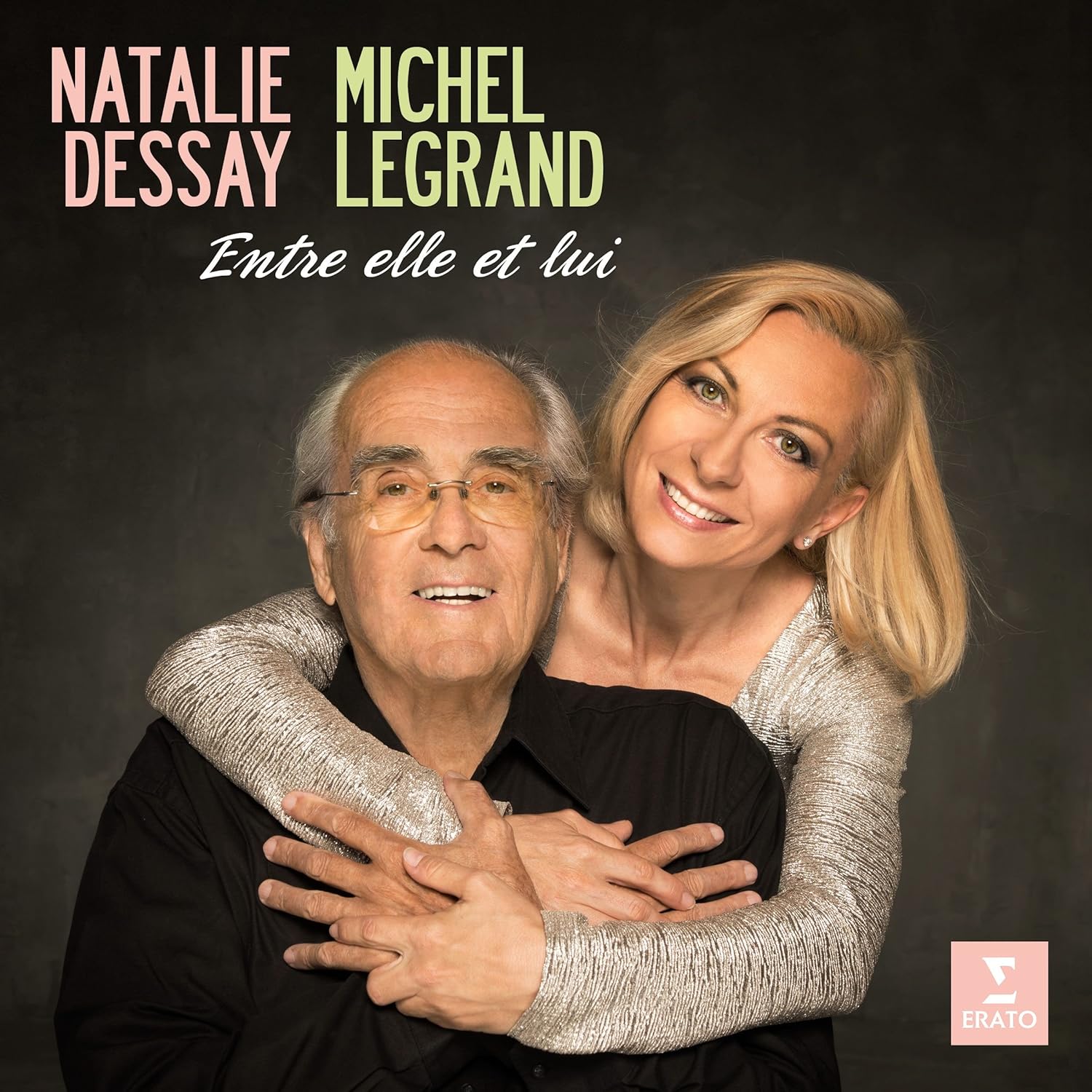
November 17, 2013 Natalie Dessay sings Michel Legrand When an opera singer turns to movies there is reason to suspect that the primary motives are not necessarily artistic. Less suspicion, perhaps, in the case of Natalie Dessay, who considers herself a singing actress rather than a diva and whose personal interests range above and beyond a stretch-limo ego and a high tessitura. What Ms Dessay sings here is, she says, the soundtrack of her life. Michel Legrand may be known the world over for ‘Windmills of My Mind’ from The Thomas Crown Affair, but in France he’s part of the furniture, dominating French cinema for the past half century. Ms Dessay heard him first when she was six years old. The chance to meet him was irresistible, the record that followed inevitable. Some of the tracks here are of such local particularity that you’d struggle to find them on major databases, others possess a domestic simplicity. A cake recipe sung with Patricia Petibon falls into both categories. But it’s followed by an enchanting Lilac Waltz and once Natalie is let loose on the Hollywood showstoppers – the Streisand prayer from Yentl, Sinatra’s What are you doing the rest of your life, the Windmills cronned with Legrand in French – she’s altogether irresistible. And then there’s the duet from Les Parapluies de Cherbourg with her husband, Laurent Naouri. Just listen. I can’t stop.
November 11, 2013 Prokofiev 3, Bartok 2 This album comes strongly recommended. On the rear cover, Sir Simon Rattle declares: ‘I don’t know when I’ve ever heard a pianist who is able to be more uncannily accurate in the Bartók concerto and then still have the ability to make it dance.’ Lang Lang adds: ‘I really think these concertos have a musical relevance that’s absolutely right for our times.’ The booklet note is written by the Editor-in-Chief of Gramophone magazine and the sleeve shows the two artists in expressions of ecstasy. The music is another matter. The Prokofiev third concerto is opened by a delicious clarinet solo that is picked up by the rest of the orchestra. Lang Lang bursts into the conversation like a man who’s late for a flight, all haste and not much feel for the atmosphere. There are some wild moments in the andantino, but the finale reverts to non-communication, the orchestra going one way, the pianist the other. The result is not so much disturbing as insipid: a breezy misreading of one of the most scalp-tingling concertos on record. Try Argerich, Ashkenazy, Kissin, or the composer himself, and you’ll hear what’s missing. In the Bartók second concerto, Lang Lang admits admiration for a 1960 Berlin recording by Geza Anda and Ferenc Fricsay. This interpretation, however, bears no resemblance to that sovereign landmark. Here, the music is driven by agitation, its wistful accents mashed into robotic motion. The Berlin Philharmonic Orchestra sound magnificent, earning the production its second critical star.
October 14, 2013 Antonio Meneses, Maria Joao Pires: The Wigmore Hall Recital London’s Wigmore Hall runs an excellent little label that showcases its best recitals and sells heavily in the lobby and online. Every now and then, however, an event leaps off its stage and can no longer be contained in house. Listen to this rare pairing of two Portuguese-speaking artists and you’ll wonder where you were that January night last year, how on earth you missed the date and what took DG so long to issue this quite exceptional recording. Pires and Menses takes Schubert’s hackneyed Arpeggione Sonata at a hypnotic pace – slow, to be sure, but so commanding as to pin you to the seat. I haven’t heard a more riveting performance in years. Brahms’s first sonata is friskier, but no less arresting. You feel like you’re intruding on the private meditation of two artists who play together every day of their lives. A set of Brahms intermezzi and snippets of Bach and Mendelssohn complete the set. On paper, just another classical release. In your ears, an inimitable experience. Why wasn’t I there? The producer is EMI veteran John Fraser, with immaculate sound by Daniel Kemper and Andrew Mellor. The lone drawback is a booklet with dreary pics and words. Wigmore Hall has great house style. What happened to DG’s?
October 7, 2013 Boris Giltburg: Romantic sonatas Winning one of the four top piano competitions is supposed to change your life with a dazzle of big dates and a major label contract. Boris Giltburg has resisted the instant temptations, sticking with a niche label for his first two releases after taking the Queen Elisabeth contest by storm. His three sonatas are nicely contrasted – Rachmaninov’s morose second in B-flat minor, Grieg’s wintry wander through Norwegian woods and Liszt’s big half-hour bruiser in B minor, all three elucidated in thoughtful sleeve notes by the artist himself. No corporate label would have countenanced so unyielding a display of serious intent, and Giltburg might have done this release a favour by appending a soft encore for less rigorous listeners. On the other hand, if he wants the world to respect his sincerity, he could hardly have picked a stronger set. The playing is an unalloyed delight, rich in character, devoid of distracting tricks and with no surplus artillery noise in the Liszt. Giltburg is a pianist you will want to hear live. Clap long enough and he might even smile up an encore.
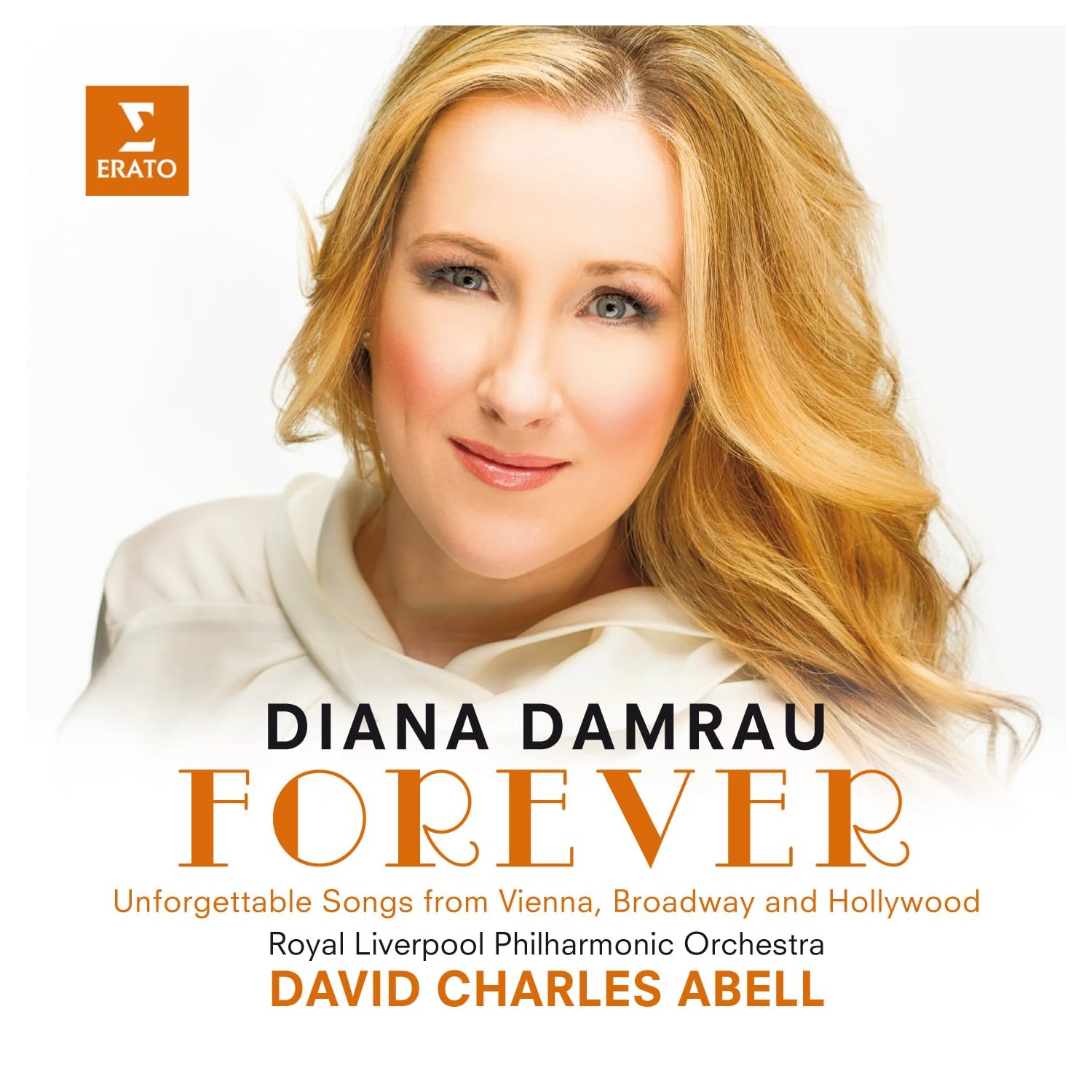
September 30, 2013 Diana Damrau: Forever This is the critical fortnight in September when labels launch vocal albums for the Christmas market and critics cower beneath the bed hoping they will go away. All the big names are out there, from Domingo to Donato, and most are doing just what you’d expect. Except Diana Damrau, who lands on my deck like an untimely spring breeze. The Bavarian soprano usually covers mainstream opera from Mozart to Strauss with a dash of big Italian roles. Here, she dips into operetta, but with a personal twist. Aside from a handful of Johann Strauss, Lehar and Kalman, she sings mid-20th century Broadway rep, some in English, some in German. To my ears, My Fair Lady is much improved auf Deutsch (and with a burglar-scaring squeak), though Sweeney Todd stumbles a bit and Ms D does Andrew Lloyd Webber a favour by choosing Queen’s English for an aria from Phantom of the Aria, perhaps the most musical rendition it has ever received. David Charles Abell conducts the Royal Liverpool Philharmonic in top-notch sound and the only regret is the superfluous, expensive inclusion of a brittle-voiced Rolando Villazon in the Merry Widow duet. The album’s best is saved for first, and last – a pair of Vocalises by film writers Wojciech Kilar and Frédéric Chaslin, wordless songs where the voice soars free and the singer stamps her own emotions on the song. Irresistible.
September 23, 2013 Richard Wagner: piano sonatas What did Wagner do before he became Wagner? In 1832 he wrote a pair of piano sonatas, a timely idea for a musician of 19, trying to find his voice. Beethoven was five years dead and no-one had yet dared to address his summit 32 sonatas. Perfect opportunity for a brash Leipzig iconoclast. Except he lacked the means. Wagner for piano is like Turner for the blind: he simply has no way to make himself comprehensible even when, as in the finale of the B-flat sonata, he takes on a theme of Beethoven’s opus 106. The melodies, moderately interesting, lead nowhere in particular and the occasional burst of bombast serves only as a hinted anticipation of operas to come. The first sonata is subsequently denigrated in Wagner’s memoirs and the second was left unprinted. Tobias Koch plays the pair on an 1852 hammerflügel whose plinkety sound confirms that these works are neither one thing nor the other, ancient or modern. They are, however, well worth hearing for the sheer megalomaniac presumption that a smooth-faced student with no prior experience could match Beethoven at his peak. This fascinating album also contains a set of sung variations by Wagner on the theme of Faust – further proof of an outsized ambition.
September 16, 2013 Hanns Eisler: Serious Songs Eisler was, in Gustav Mahler’s poignant phrase, three times homeless. Expelled from Vienna in 1918 for his sister’s communist activities, he left Berlin on Hitler’s ascent to settle in Hollywood, only to be evicted after the War when his turncoat sister denounced him as a communist to the House Committee on UnAmerican Activities. What followed was the fourth and most painful of Eisler’s exiles, a sojourn until death in the total-surveillance state of East Germany. Depressed and disillusioned, Eisler wrote a set of Serious Songs for baritone and instrumental ensemble, finishing it shortly before he died in August 1962. His texts veer from the dark introspection of film-director Berthold Viertel’s ‘Sadness’ to the barely-disguised dismay of an ode to the ‘20th Party Congress’. His musical language is closer to Mahler than to Schoenberg, whose pupil he had been. Every song aches for an unattainable home. The German baritone Matthias Goerne articulates Eisler’s anguish with crisp diction couched in a velveteen musicality. More even than Dietrich Fscher-Dieskau, who took up these songs half a century ago, Goerne goes to the heart of pain without a trace of pity and with sudden flashes of wit. He turns wilder and more dramatic in a set of Bertolt Brecht songs for voice and piano, accompanied by Thomas Larcher, who also performs Eisler’s earliest work, a 1923 piano sonata dedicated to Schoenberg. The sound is exemplary and the cover image arresting; this is a near-perfect record.
August 15, 2013 Kuniko: Cantus Sir Thomas Beecham used to call his percussion ‘kitchen instruments’ and treat the players at the back of the orchestra like household staff. Percussion has come a long way since then, both in the diversity of instruments and in force of ambition. Kuniko Kato, a US-based Japanese virtuoso, applies her marimbas, crotales, bells and vibraphones to the works of living composers, several of whom are delight in the extra colours and dimensions she adds to their work. Arvo Pärt and Steve Reich, meticulous to a fault, assisted in the making of this album. Reich’s landmark 1985 work New York Counterpoint is shaded by Kuniko gently away from its original insistent heaviness into a sound picture that recalls Hokusa’s Wave, the original cover of Debussy’s La Mer, a seascape full of promise and menace. Four pieces by Pärt are imbued with a shimmer so haunting that you forget they were originally written for strings – none more so than the 1977 Cantus in Memoriam Benjamin Britten which, no longer mourning, finds a certain celebration in a composer’s life. The sound, recorded at 24-bit/192hz by Yuji Sagae and Junichiro Hayashi, is outstanding. Why can’t all records sound this good?
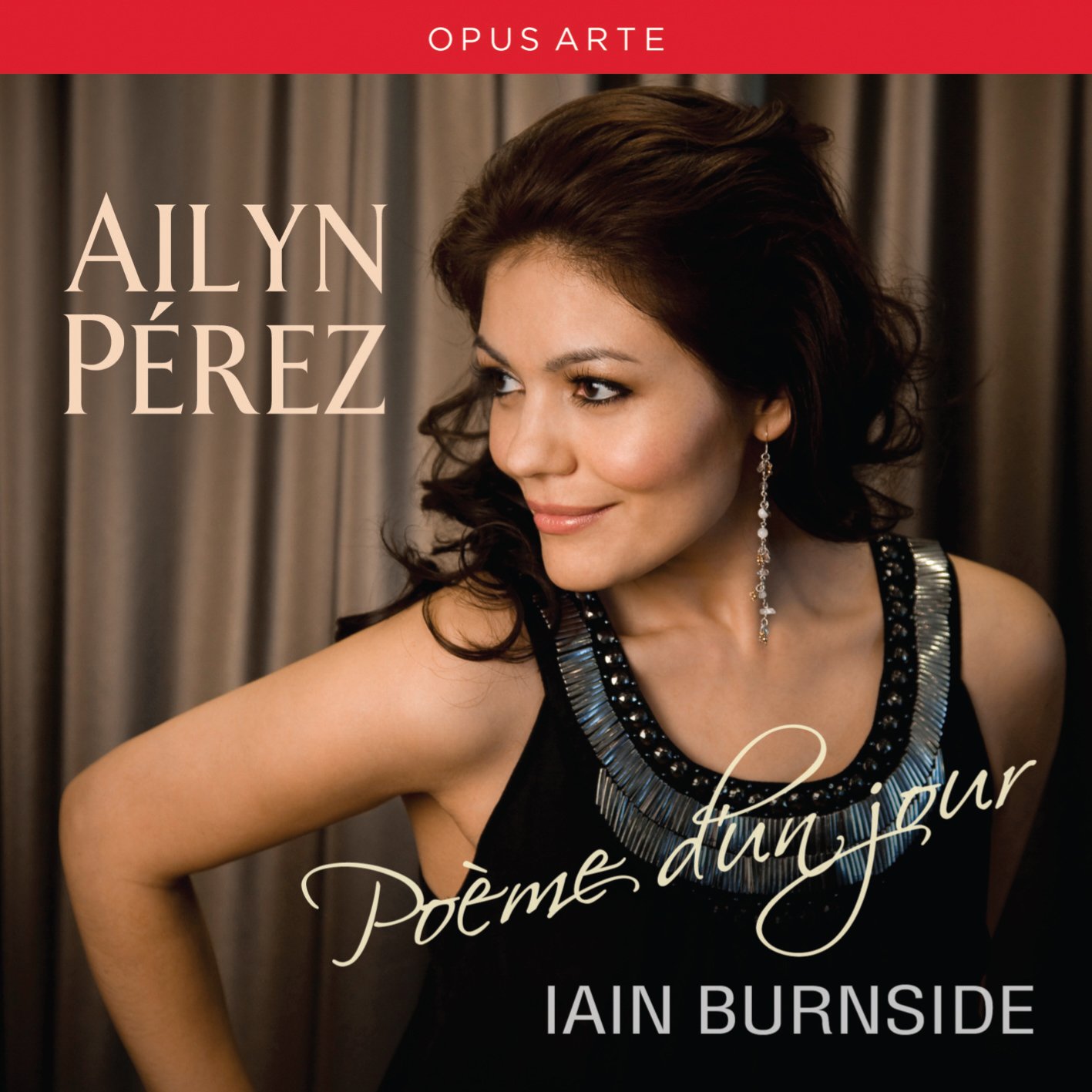
Three women singers Ailyn Perez Total enchantment from the young US soprano in two sets by Reynaldo Hahn and a triple meditation by Fauré; the Spanish songs are pretty hot, too. Ian Burnside accompanies.
Alice Coote Brigitte Fassbender set the benchmark for mezzo-sopranos singing Schubert’s Winterreise cycle. Alice Coote – with Julius Drake at the piano – delivers a rich and dark journey, lacking just the top notch of tension.
Anna Prohaska The next big voice in Baroque mixes Handel with Purcell, shedding many English consonants along the way. The voice is lovely. Jonathan Cohen directs.
August 8, 2013 Vladimir Horowitz: The 1982 Royal Festival Hall recital One spring Saturday in May 1982, remembered by witnesses as if yesterday, the most famous living pianist gave his first recital in Europe for 31 years. Vladimir Horowitz had been acclaimed as a phenomenon when he escaped Communist Russia, aged 22, in 1925. A pianist with a pinpoint tone and a technique before which Rachmaninov himself paled, he conquered the world’s concert halls, married Toscanini’s daughter and was lavishly wooed by record labels. No-one, however, owned Vladimir Horowitz. His sensibility was so particular that he never rose before lunchtime, ate steamed fish, and played recitals only at four in the afternoon. His long absence from Europe was due to periods of mental instability and hospitalisation. Few who attended the RFH in May 1982 had ever heard him live before. The release of that recital, as the cover-mount of BBC Music magazine’s September issue, is momentous. The opening notes of a Scarlatti sonata demonstrate that this was a pianist who interpreted music from within a bubble of impermeable subjectivity, oblivious to precedent and expectation. Horowitz perceived no barrier between the early classicism of Scarlatti and Scriabin’s crackpot modernism: both were music to his soul. He played Schumann’s Scenes from Childhood with an infant-like innocence and Rachmaninov’s second sonata with a profound, empathetic loneliness. The recorded sound, a shade indistinct, is no harsher than his New York studio sessions, and the remoteness of the applause underlines a perceptual distance between Horowitz and the rest of us. Only in his final DG recordings, taped in his own home, does Horowitz permit intimacy. No piano lover can afford to leave this disc unplayed. >Buy this CD at Classical-music.com
August 1, 2013 Britten: Peter Grimes Tosca has been staged on the ramparts of Rome and Turandot on the Great Wall of China, but putting Peter Grimes on Aldeburgh beach in June risked the inclemency of an early English summer, which proved frigid. Rehearsals and first performances of this open-air production were survived with heavy blankets and hip-flasks. Even after the gales ceased, greatcoats remained essential. There was never a risk of stage nudity in this production. Adult content, on the other hand, is innate. Raising sympathy for a fisherman who caused the death of boys and may have abused them is as tough a call today as it was at the Sadlers Wells premiere in June 1945. Britten’s self-image as an outsider in a hostile world – gay, pacifist, an artist – is nowhere more forcibly experienced. How to play the loner Grimes is one of the supreme challenges in modern opera. Alan Oke nails it from his first response to the examining coroner. Neither confrontational nor contrite, he stands tall in the dock, his voice pure and sure. A fishing man who lives by his catch, he needs to find another boy to take to sea. Scene by scene, we are drawn to his plight. Giselle Allen is a touching schoolma’am, David Kempster a convincing Captain Bulstrode, the chorus a constant threat. At the open-air beach performances, the Britten-Pears Orchestra was beamed in from indoors. The mix here is imperceptible and the sound unobtrusive; engineer Mike Hatch deserves a credit twice the size and conductor Stueart Bedford pulls off an extraordinary feat of coherence and endurance. But it’s Oke who makes the case for Peter Grimes and steals the show. There used to be two great Grimes on record: Peter Pears and Jon Vickers. Now there are three.
July 25, 2013 Arthur Schnabel: piano works Schnabel was probably the most influential pianist of the 20th century, if by no means the most popular. The great crowd pleasers were Russians and Poles. Schnabel (1882-1951) was a Vienna-trained intellectual who edited Beethoven and Schubert sonata editions and performed with a blazing disregard for occasional wrong notes. Schnabel was the first to record the 32 Beethoven sonatas and to perform the late Mozart concertos. A man of limitless curiosity, he softened his demeanour with twinkling wit. Many of his quips and his recordings are still doing the rounds today. Telling everyone he was first and foremost a composer, he was very little performed. His late works, of which he was proudest, are severely atonal. The music here dates from around the First World War, much of it long-lost. A piano quintet of 1915-16 oozes Viennese charm with a sour undertone, not unlike Ravel’s La Valse. At almost an hour it tests the patience, but the personality behind it is recognisably Schnabel – a man who always liked to have the last word. Other works include a piano sonata and two sets of songs. The earlier the music, the more playful it gets. Irmela Roelcke is the pianist behind the project and her persistence really pays off. Next time you listen to a historic Schnabel recording, try some of this for dessert. >Buy this CD at Presto Classical
July 19, 2013 Down by the Sea: A Collection of British Folk Songs At the risk of prejudicing any latecomers and with 2013 barely half gone, I declare this release to be my choral album of the year. I’d be stupefied if anything stronger comes long. The title is misleading, enticing you to expect horny-handed fishermen’s heave-hos of the kind enshrined by Kathleen Ferrier in Blow the Winds Southerly some 65 years ago. Put the thing on play, however, and you’ll find that most of the music is by living composers, with a bare half-dozen by Vaughan Williams, Holst, Grainger and Moeran. The oldies are the least interesting of the fifteen tracks. Wrap your ears around Judith Bingham’s The Orphan Girl and marvel at her ingenious harmonies. John Duggan’s Over the Moon puts you right there: into the blue beyond. Hilary Campbell’s setting of Blow the Wind Southerly drags the old ditty two generations away from Ferrier’s hand-crafted, perilous simplicities to an era of faceless industrial fishing. Campbell is the conductor here of the professional chamber choir, Blossom Street. The standout track is James MacMillan’s Lassie, Wad Ye Loe Me?, a Scottish maiden’s misty dirge with a defiant undertone. MacMillan wrote it as a wedding song for a pair of pals. I shall be singing it in the shower all next week, and inviting friends to join. Terrific stuff.
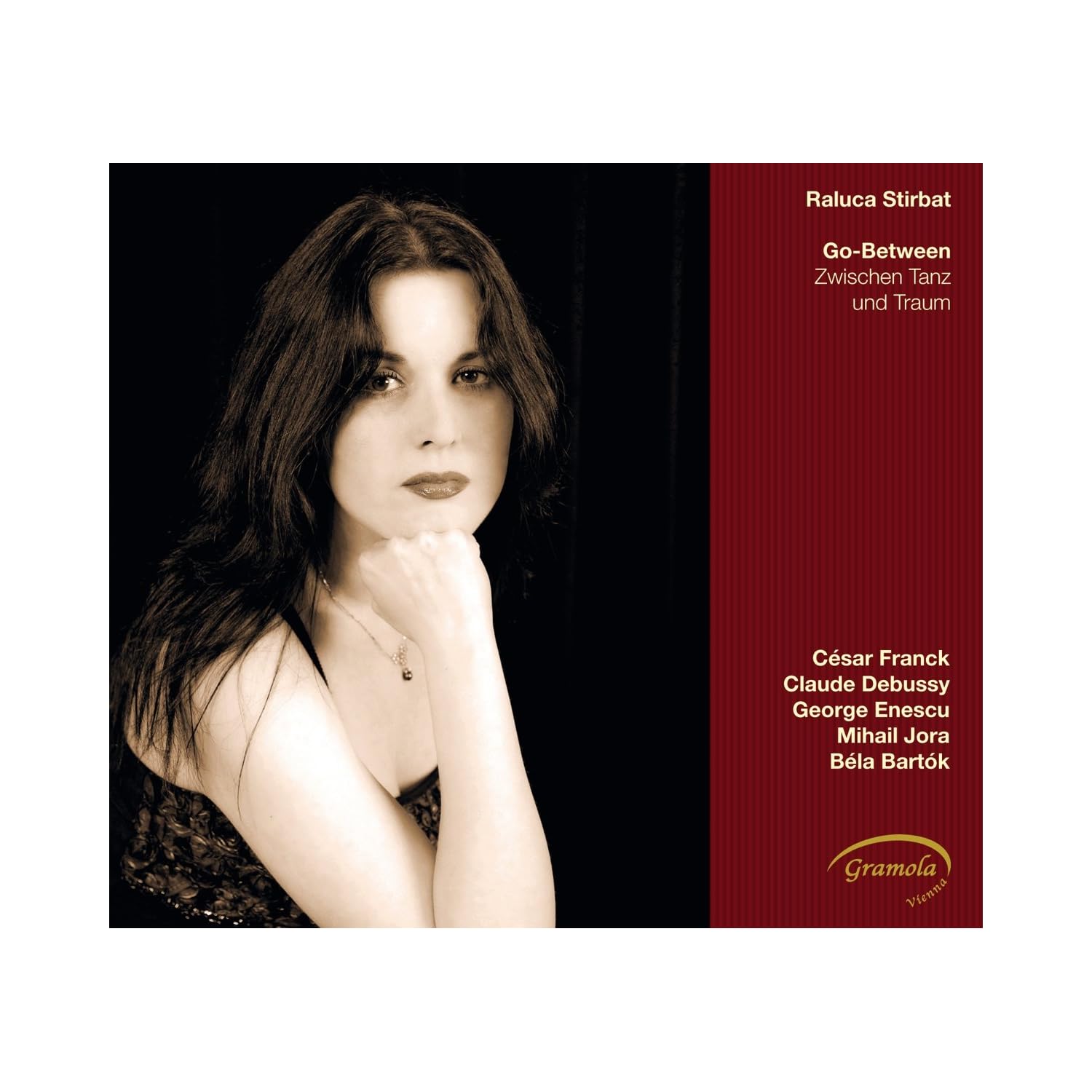
July 15, 2013 Raluca Stirbat: Go-Between The Bucharest intelligentsia used to imagine they lived in an outer suburb of Paris, so aspirational was French influence in their Romanesque corner of Europe. In this bilateral recital, an exceptional Romanian pianist performs delicate Gallic sets by César Franck and Claude Debussy before applying heavy French polish, with a dash of added fire, to her own national heroes. The Pièces Impromptus by Georges Enescu date from 1946, the last summer he spent in his homeland before escaping into French exile. Wondrously melodic, they ripple with mutually antagonistic rhythms and underlying tensions, possibly a reflection of his inner turmoil. Enecus stands head and shoulders in influence above all Rumanian composers. Stirbat, who recently campaigned to save his childhood home from demolition plays his pieces with the greatest empathy. The composer Mihail Jora was found dying by Enescu in a military hospital during the First World War and literally played back to life by his mentor. His Joujoux suite (1925) has something of Debussy’s childhood pieces about it. Finally, Stirbat gives us Bartok’s Rumanian Folk Dances, a masterwork of musical anthropology played with limitless zest in a truly refreshing album.
July 8, 2013 Timo Andres: Home Stretch Not a composer you’d want to take too seriously, Andres spends much of this album messing up a Mozart concerto. The rest consists of two original compositions for keyboard and orchestra – one of them a nostalgic sort of homeward bound piece that provides the title track and the other a languid, rather envious paraphrase on themes of Brian Eno. But it’s Mozart that’s the meat of the album. Andres takes on the so-called Coronation Concerto and subjects it to random deconstruction, bending a theme way out of tune or so far off line that it becomes a completely different subject. These are clever little mind games and, for the first few bends, you will smile and go along with his fancy. But the joke wears out before the concerto does and I’m not sure it bears repetition. Andres, raised in rural Connecticut, has formidable fingers and a quirky mind that bears some comparison to the early Thomas Ades. But the dominant voices on this album belong to others. His own, at the moment, is frustratingly shy.
Three symphonies Mendelssohn: Italian, Scottish Why is the Orchestra of the 18th Century, conductor Franz Brüggen, playing music by Felix Mendelssohn, who was born in 1809 and looked resolutely into the future. This is early music correctness gone off the scale. The playing is decent, but would sound much better on 19th century instruments.
Elgar: 2nd symphony Why is the Stockholm Philharmonic playing the less tractable of Elgar’s symphonies? Because its conductor, Sakari Oramo, fell in love with the piece while working in Birmingham and wants to teach it to the world. The performance is supple to the point of slickness and very appealing in the first two movements. It loses wit in the Rondo, but the finale has swagger and the sound quality is outstanding. Stockholm is fast becoming a musical destination.
Bruckner: 6th symphony Yannick Nézet-Séguin made his claim to world attention with Bruckner 7,8 and 9, performed by Montreal’s Metropolitain orchestra. The sound texture in the sixth is less appealing and the ceremonial aspects of Bruckner’s music are allowed to overwhelm dramatic coherence. Refer to Klemperer for a recording that leaves no doubts. >Buy this CD at Presto Classical
July 1, 2013 Elliott Carter: volume 9 Fun with Elliott Carter is not a phrase I ever expected my fingers to tap out. The US composer, who died last year at the age of 103, was a reflective intellectual who erred, if at all, on the side of asceticism. Which is to say, he could be as dry as dust. But the three songs that open this album consist of a mock Elizabethan madrigal and two ballads that could have been written by Samuel Barber were the orchestration not so witty. A great big smile spreads across my chops. Onto the serious stuff. Charles Rosen, the polymath pianist who died a month after Carter, plays pinball here with the prodigiously difficult, almost unfathomable Carter concerto of 1967, a work in which, according to the composer, ‘the soloist becomes increasingly dissociated from and opposed to the orchestra’. You can say that again. But no way is Rosen going to lose this fight. The Basel Sinfonietta under conductor Joel Smirnoff may think they’re leading the way, but the concerto is not over until the fat pianist clangs, and, when it’s over, you want to hear it again just to revel in the sumo-wrestling aspect of this musical fitness test. Like I said: fun. (Who would have guessed from the library-style album title?)
June 25, 2013 Paul Ben-Haim: Chamber works The foremost composer in the early years of the state of Israel, Ben-Haim was a romantic nationalist in an alien landscape. Munich born in 1897, Paul Frankenburger) docked at Haifa in 1933 and was shocked to discover that Europe did not hold a monopoly on musical tonalities. He took a Hebrew surname and, inspired by a Yemenite folksinger, Bracha Zefira, composed Hebrew songs in microtones, with ultra-correct German precision. His chamber music, written for domestic use under the heavy skies of a Tel Aviv summer, has fallen into disuse; this release is an illuminating introduction. Passing quickly over a juvenile piano quartet, we discover a kindred spirit to Bartok, ears wide open to indigenous and ambient sounds, feet ever ready to jump up and learn a Beduin dance. The most attractive pieces, athletically played here by Canada’s ARC ensemble, are a pair of violin-piano jigs written for the visiting virtuoso Zino Francescatti, and a quintet for clarinet and strings that hovers between the bourgeois salon and the high-jinks of a klezmer band against a backdrop of heat and dust. Ben Haim died in 1984, never fully acclimatised to his newfound land. The record cover is a stunning portrait of Tel Aviv’s Dizengoff Square in pristine Bauhaus design. No photographer credited, but a joy to behold.
Three concerto albums Schumann/Dvorak The Dvorak piano concerto is a relative rarity, the Schumann ubiquitous. Both are sweetly rendered by Francesco Piemontesi, with the BBC Symphony Orch, cond. Jiri Belohlavek. They make the more persuasive case for the Dvorak, played in the original 1883 version; the andante of the Dvorak simply must be heard.
Dvorak A-major cello concerto Written in his 20s and not performed until the composer was long dead, the juvenile work anticipates the great B-minor cello concerto of 1895 in depth of tone and colour. It has a couple of original themes and is unmistakably Dvorak. But the mastery has yet to develop and the listener’s interest fades long before the last chord. Alexander Rudin directs Moscow’s Musica Viva very ably from the soloist’s seat.
Debussy, Francaix, Poulenc, Ravel Nice idea, but the Debussy piano concerto is juvenile, the Francaix is frippery, the Poulenc fizzles out after an arresting opening and only the Ravel G major counts as an unqualified masterpiece. Florian Uhlig has all the fun at the keyboard. The radio orchestra of Saarbrücken manage to keep up, under Pablo Gonzalez’s baton. >Buy this CD at Presto Classical
June 17, 2013 Chopin, Dutilleux: Preludes An intriguing concept by the rising Romanian pianist, Alexandra Dariescu, this is the first of three releases to contain the complete preludes of different composers - in this instance Frederic Chopin and Henri Dutilleux. It is also the first Dutilleux recording to appear since his death last month in Paris, aged 97. The two composers, separated by a century and more, are joined by a city and its culture. Both regarded the conquest of Paris as the summit of their dreams. Both conceived sounds of rare refinement. There is short measure here in Dutilleux – only three preludes against Chopin’s 26. Each of the three, however, is a perfect gem, none more so than the playful and perplexing Jeu de Contraires (Game of Opposites), which Dariescu opens up, alyer by layer, like a Russian doll. In Chopin, her playing is never less than pleasing, if seldom revelatory. What is outstanding here is the piano sound at Champs Hill, along with Vladimir Mojico’s rainswept record cover, a quirky, modern take on Renoir’s Les Parapluies. Nice, when a small label still cares for appearances.
Three pianists Frederic Mompou Arcadi Volodos shot out of Russia around the same time as Evgeny Kissin, but settled in Spain and has travelled less. His first album in quite a while focuses on the contemplative Spanish composer Mompou. It’s mood music with filmic atmosphere but the attention flags before the disc stops.
Handel: suites for keyboard Daria van den Bercken rides round Amsterdam on her bike inviting people to her home for tea and Handel. Her debut disc is full of flair and passion, beautifully recorded. The bonus is a little-known Mozart tribute to Handel.
Russian album Olga Scheps, a young Russian in Paris, plays drawing-room miniatures that reveal great skill and little taste. You reach the 11th track before you hear what she can do with Scriabin and Rachmaninov – and it’s not negligible.
June 10, 2013 Conrad Tao: Voyages This album is an instant collectible. It marks the record debut of the last artist to be signed by EMI Classics before the label disappears. The artist is 19 years old, born in Illinois to Chinese immigrant parents and drawn to both piano and violin. At 14, he played concertos by Mendelssohn, one for each instrument, in the same concert. He also composes. Here, he plays solo piano, opening with a winsome shard of minimalism by Meredith Monk, whom he claims as an influence. He follows with preludes by Rachmaninov, Ravel’s Gaspard de la nuit and some works of his own. It is all rather accomplished for a musician of his age. Regrettably, it is no more than rather. The playing in Rachmaninov and Ravel lacks signature or singularity. Tao plays the pieces off pat, all the notes in place and mostly joined together. He has nothing new to say. As for his own creations, which include a six-minute sketch for piano and iPad, they are little more than doodles, tiny ideas with nowhere to go. Tao has a definite musical facility that may develop over time. As the very last artist on EMI Classics, he turns out the lights with a mere whimper.
June 3, 2013 Fairy Tales Why did no-one think of this before? A batch of bedtime stories, wickedly recited by top actors, interspersed with music derived from the selfsame fairy tales. Simple, and brilliantly done. Start with a subversive version of Cinderella – minimum age six, I’d reckon – read by Tom Conti and sandwiched between two dances from Prokofiev’s Cinderella suite, reduced for violin (Matthew Trusler) and piano (Martin Roscoe). This makes bedtime so much more fun for parents and kids than it ever was before. Clive Owen gives a silky reading Jabberwocky, while Kenneth Branagh’s makes merry nonsense of Edward Lear’s verse, bookended by two Shostakovich dances. The music is age-neutral and the whole album feels like a family affair, a marriage of lightness and lilt. Click on Stravinsky’s Circus-Polka and Spike Milligan’s Jumbo Jet and you’ll get the point….
Three Bach sets Cello suites Jan Vogler’s Stradivarius has a tone so rich it’s almost indecent. His playing is quick and supple and the New York studio is appropriately resonant. Among several sets this year, these suites have easily the best sound. Sadly, Sony don’t both to credit the studio team.
Concertos Viktoria Mullova (violin) and Ottavio Danone (harpsichord/director) have found a remarkable rapport in Bach – so much so that you forget whether the concerto they are playing was written for the violin or transcribed from another instrument. Either way, the performances just fizz along with the Accademia Bizantina.
Orchestral suites Expect organic from the Akademie für alte Musik Berlin? You got it. But more, much more. The tempi are fiery and full of risk, all done without a named director. Thrilling performances from 1996.
May 20, 2013 Igor Stravinsky: The Rite of Spring Stravinsky was merciless to conductors who attempted his signature work. Herbert von Karajan’s recording he dismissed as ‘too bland’, Pierre Boulez’s as ‘effortless… too fast’. Leonard Bernstein he berated for adding ‘excessive dynamics’. Even Pierre Monteux, who conducted the riotous 1913 premiere, came in for muttered criticisms of his subsequent performances. Given that Stravinsky’s own three recordings differ widely from one another in tempi and ambience, the composer is the last person on earth to preach consistency. Still, if the man who write the music declares a performance to be downright wrong, why should we bother to listen to it? Because it can be downwrong right. Leonard Bernstein’s 1958 Rite recording with the New York Philharmonic is a case in point. It explodes out of nowhere like a thunderstorm at sea and keeps us gripping the sides for dear life. Digitally remastered from Howard Scott’s excellent studio sessions, the woodwinds come through with wide-eyed clarity, driven almost to the limits of human breath. Bernstein liked to remind musicians that Stravinsky’s original title for the work was ‘The Kiss of the Earth’, a fusion of sex, youth and nature. This account ticks all three boxes. No matter how many Rites you own, this one is not to be resisted. The older Stravinsky would probably have preferred Yuri Temirkanov’s 2010 recording with the St Petersburg Philharmonic – measured, manicured and unmistakably Russian in its intermittent melancholia. There are episodes of exquisite natural beauty and organic sounds. What’s missing is Bernstein’s abandon, but the details are delicious. These are two extremes of how the Rite can sound. Take your pick.
Three contemporary CDs Magnus Lindberg: EXPO The Swedish composer in residence at the New York Philharmonic presents three large works in shimmering, rich textures that remind me of an ocean liner seen from afar. The filling in this convoy is a big-boned piano concerto for Yefim Bronfman. Every orchestra should have a resident like Lindberg.
Dobrinka Tabakova: String Paths Bulgarian-British, Tabakova creates hypnotic fusions in the manner of Gavin Bryars with an underlying ache of exile. It makes for very easy listening. The biggest and best piece is a cello concerto, sensationally played by Kristina Blaumane.
David Chesky: The New York Rags Chesky takes 18 facets of the sleepless city and plays the a** off them. Edgy, energetic neurotic, you name it, I particularly loved ‘The Bernstein’ and ‘Kids You’re Late for School Rag’.
May 7, 2013 Joseph Nebra: From Silence Little known outside Spain, Nebra (1702-1768) composed around 50 operas and stage works, as well as a large volume of church music in his capacity as Deputy Master of the Royal Chapel in Madrid. What we hear on this album for the first time is his keyboard music, which has gathered dust in church and private archives, its originality unrecognised. The sonatas and toccatas reveal an intelligent musician who is searching for a language that is as far away as possible from Domenico Scarlatti, dominant in Spain at the time. Secure in his classical structures Nebra writes in a manner reminiscent of early Haydn or Mozart – frisky, entertaining and easy to absorb, or ignore. One imagines these pieces were intended for ruling-class dinner parties; if so, they could serve the same purpose today. Where Nebra arrests the attention is in his slow pieces, marked Grave, some of which are so slow they stop the clock and ask big questions about life on earth. The music feels at once familiar and entirely fresh. Moises Fernandez Via plays the set with great daring on a modern instrument in a Massachusetts banqueting hall, finishing off one of the incomplete Graves with his own improvisation. Try it for dessert.
Four Mozart concertos Arturo Benedetti Michelangeli The touch is like no other. After a pedestrian introduction from the Stuttgart Radio orchestra (conductor Antoine de Bavier), the pianist enters with the sound of a raindrop in a water barrel. Uncanny, inimitable, you must hear Michaelgeli in the K466 and K415 concertos, recorded in 1956 mono. No second thoughts.
Angela Hewitt The Canadian pianist is recording the set in an Italian mountain resort, far from the studio pressures of the big city. There’s a congenial feel to these performances, ideally suited to the vivacious K453 concerto. The climactic K595 feels a tad too laid back for my taste. Hannu Lintu conducts the Mantua chamber orchestra.
Alessandro Carbonare Claudio Abbado’s principal clarinet in the Mozart Orchestra can play the concerto with one hand tied behind his back, or so it seems. He has a fabulous tone, but he makes the music sound like child’s play. The companions works are the bassoon and second flute concertos.
Romain Guyot The Chamber Orchestra of Europe and its principal clarinet play the concerto without benefit of conductor. The added freedom is audible in Guyot’s playing – his playfulness – which lifts the performance above the common run. Five orchestra members then add an admirably well-sprung account of the clarinet quintet.
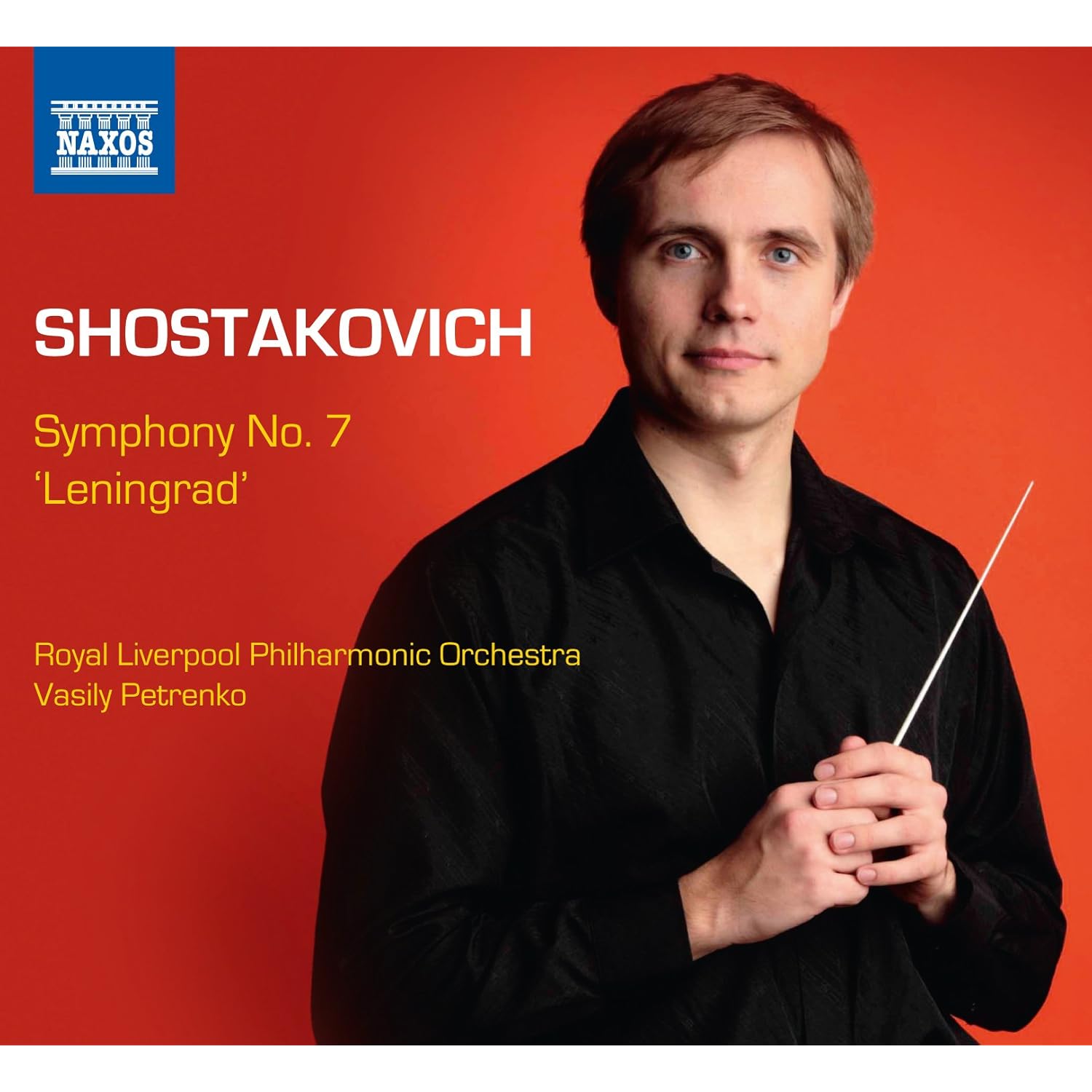
April 29, 2013 Shostakovich: 7th symphony Liverpool’s cycle of Shostakovich symphonies stands apart from all previous recordings for its edginess and its youth. Vasily Petrenko, the conductor, is 36 years old. He grew up in the dying embers of Communism and addresses the symphonies with no ideological agenda. He performs the Leningrad Symphony not as a relic of an historic event but as a work of music that demands objective interpretation in a different century. The ear is struck immediately by his refusal to overplay textural excesses. The atmosphere is quieter, less ominous than we’re used to. Flutes and clarinets are reduced to a whisper and strings to a hushed susurrus. When the climaxes explode, they do so with total shock and desperation. Between extremes, the conductor maintains an even emotional keel, avoiding the risk of melodrama that Bartok so wickedly caricatured in his Concerto for Orchestra. Petrenko puts his mind to saving the symphony from itself. Playing in another port-city at the western edge of a civilisation, the Royal Liverpool Philharmonic Orchestra deliver delicacy, empathy and, when required, astonishing power. The recorded sound is a shade below pristine (my only reservation) but the performance is treasurable, a terrific affirmation of a towering masterpiece.
Three Latino releases Ernesto Lecuona: The piano music Six CDs of music by a fascinating Cuban composer and pianist, who played the halls of Europe and won the envy of Ravel. Lecuona (1895-1963) has a rhythm all his own and an inexhaustible reservoir of dance tunes. How Thomas Tirino manages to stay seated at his piano is a mystery. The Polish Radio orchestra accompanies.
Brazilian sentiments Cristiane Roncaglio sings the socks off a set by Jobim, Villa-Lobos and others less known. Accompanied alternately on piano and guitar, she gives a semi-latte vocal flavour to these dark, romantic and insistently evocative ballads. Try one, you won’t resist the rest.
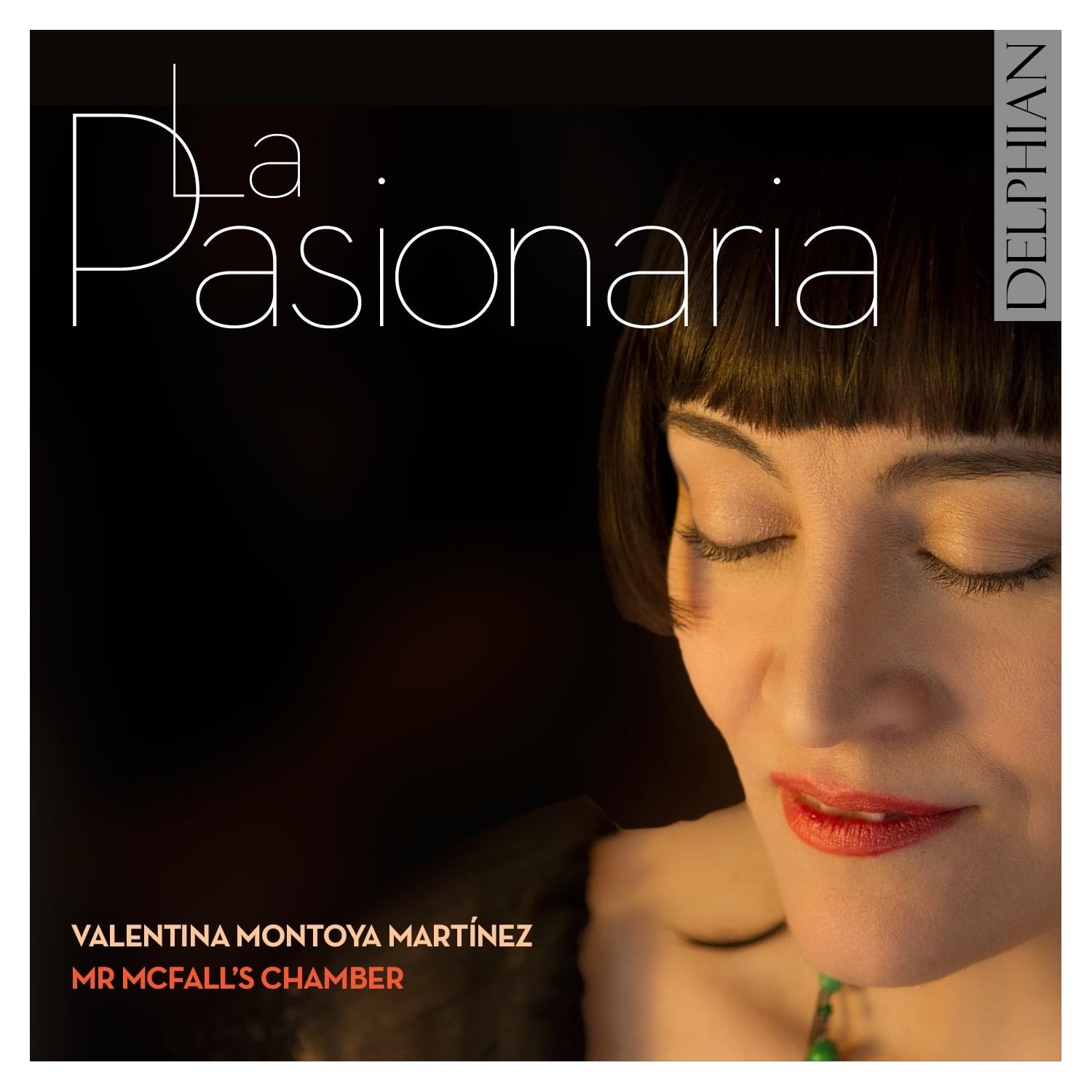
La Pasionara Irresistible Argentine melancholy from Valentina Montoya Martinez and Galsgow’s Mr McFall’s Chamber. The songs are by Astor Piazzolla and Valentina herself. They speak of the force of love, and its futility. The voice is sultry, bruised, undefeated. Lovely.
April 29, 2013 Valentin Silvestrov: Piano works When the Soviet Union collapsed, a generation of fine composers vanished into the vortex. Bereft of a parent state that fed and restrained them, some embraced exile, others bewailed the loss. Valentin Silvestrov, a Ukrainian rebel in Soviet times, adopted a baby-faced musical innocence that is at once appealing and disturbing. His set ‘Naïve Music’ sounds as if it could have been written by Tchaikovsky, a pair of waltzes defer to Chopin. Silvestrov refers obliquely to his ‘metaphorical style’ but what one hears is close to imitiation. Beyond that beats a heart that aches for the certainties of melody and a head that knows exactly how to steer a tune clear of sentimentality. If you love Chopin, you will wonder why Chopin didn’t write these waltzes first. Elisaveta Blumina, an accomplshed Leningrad pianist exiled in Dublin, delivers marbled enigmatic serenity, much as Tatiana Nikolayeva did when she played the Bach-like preludes and fugues written by Dmitri Shostakovich in darker times. There may be secrets in this neo-classical revival for John Le Carre to decode. >Buy this CD at Presto Classical
Three Rachmaniov recordings Cello sonata The German cellist Julian Steckel, 30, is more sentimental than most Russians in this ultra-romantic sonata. Paul Rivinius is the pianist. Prokofiev’s late sonata is the companion piece.
Cello sonata The British-based cellist Leonard Elschenbroich pairs an attractively muscular account of the Rachmaninov with a thoughtful reading of the little-known cello version of Shostakovich’s deathbed viola sonata. Alexei Grynyuk is the pianist and the sound is outstanding.
3rd symphony The Detroit SO with Leonard Slatkin give one of the most compelling accounts of the symphony’s hypnotic hushed opening. The Adagio slackens off a bit, but the orch’s in fine fettle and go on to raise the roof in Symphonic Dances. Fabulous sound.
April 22, 2013 The Edge of Light Sometimes composers are best understood by what they do least. Neither Olivier Messiaen nor Kaija Saariaho wrote much for piano. Both use large orchestras and unconventional instruments to describe the world they inhabit. Messiaen (1908-1992) evokes wonderment at the idea of love and the glories of nature. Saariaho (born 1952) explores human intimacies. For both composers, the piano was a working tool rather than a means of expression. Or so one is led to believe. But this remarkable cache of little-known piano music connects the two composers in unexpected ways, tracing their common heritage in the impressionistic pianism of Claude Debussy. Messiaen’s Eight Préludes are an early set, written after his mother’s death in 1929. Rather than mourning his loss, he seeks meaning in a kaleidoscope of colours. His piano quintet is a three-minute valediction from the year before his death. Together, the two pieces bookend his life with the intensity of confession. Saariaho’s piano works, solo and quintet, are sandwiched between two of heroperas. With titles such as ‘I unveil my skin’ and ‘Open up to me, fast’, the intent is transparent and the emotion clinical. Gloria Cheng drives the keyboard, the Calder Quartet provide energetic strings. No sworn fan of either composer, I warmed to this album on first hearing, and keep returning to it.
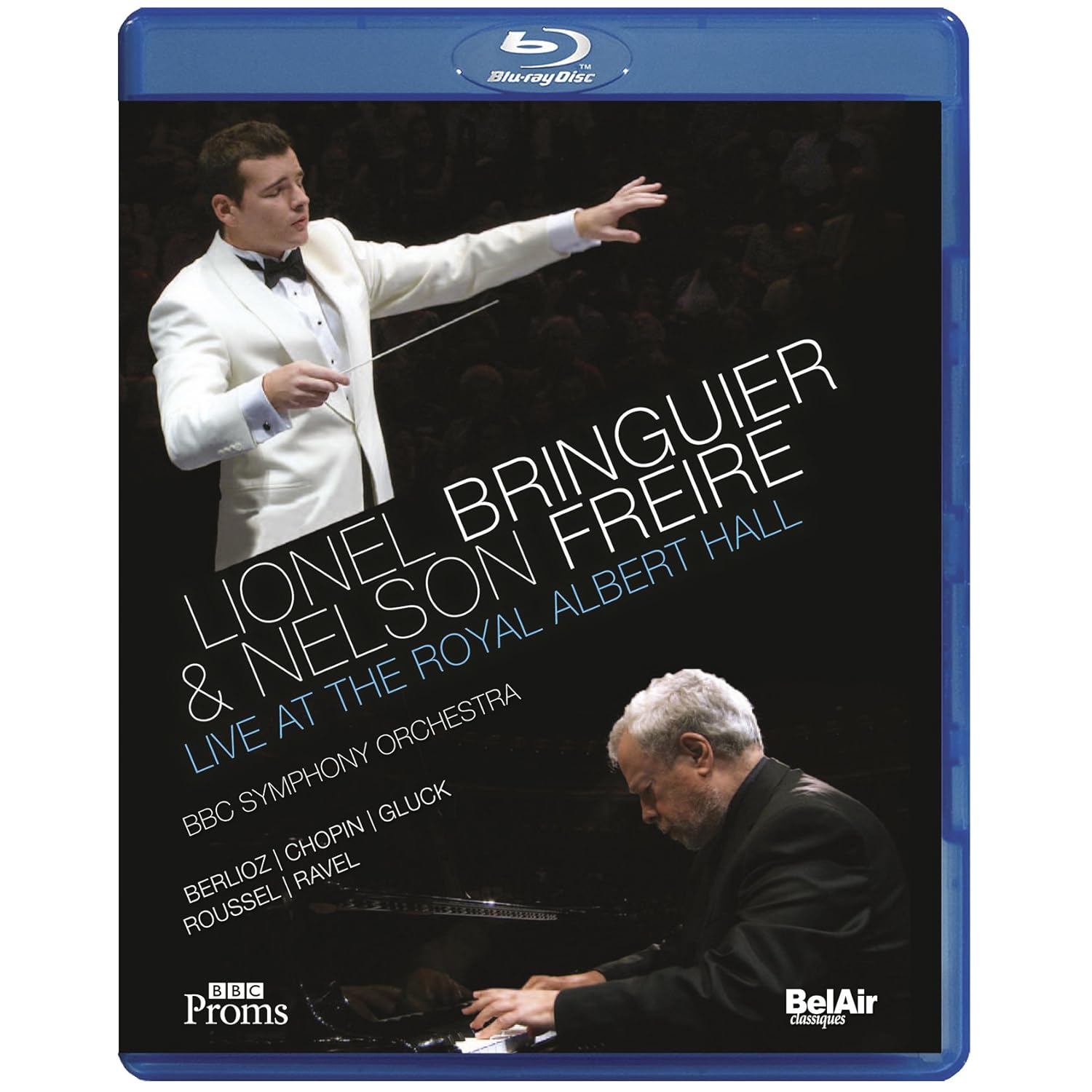
April 15, 2013 Lionel Bringuier & Nelson Freire Bringuier, 26, is the youngest conductor since Gustavo Dudamel to take command of a world-class orchestra. He has been announced, almost unknown, as David Zinman’s successor at the Zurich Tonhalle and there’s much curiosity as to what he can do. This DVD of a 2010 BBC Proms concert is the first evidence of his abilities on record. Looking even younger than he really is, Bringuier opens with a Toscanini favourite – Berlioz’s Le Corsaire overture – and makes it entirely his own. Barely a minute in, he freezes the tempo to release the most delicate of clarinet lines. It’s a daring gesture, a declaration of intent: this conductor knows exactly what’s needed to bring the music to life. In the concerto, Chopin’s second, the august Brazilian soloist Nelson Freire turns deeply inward, with little for the conductor to do except keep the orchestra in harness. The symphony is Albert Roussel’s Third, a relative rarity outside of France. Bringuier teases out the emotion that lies beneath its brocaded bourgeois formality, no small feat for an interpreter. DVD may not be everyone’s favourite format for listening to music but, if this young man goes half as far as the Zurich musicians predict, this debut release will be a collector’s item many years from now.
Three cello concerto CDs Moeran Ernest Moeran’s post-war oncerto of 1945 is reminiscent all too frequently of Elgar’s, replacing its emotional wrench with gentle nostalgia. Guy Johnston gives a lovely, lyrical account. The Ulster Orchestra append Moeran’s Merrie England Serenade in G.
Strauss: Don Quixote There hasn’t been a fresher performance in years of the ‘fantastic variations’ that this. Alban Gerhardt is the dominant Don, Lawrence Power’s viola his Sancho Panza. Markus Stenz conducts the excellent Gurzenich Orchestra of Cologne. Till Eulenspiegel is the filler. Lovely.
Bloch, Bridge, Hough Steven Isserlis’s attack on Bloch’s Schelomo is fiercer by half than Natalie Clein’s recent stunner, and maybe more authentic; the Kings of Israel were not softies. His account of Frank Bridge’s Oration is vigorous and eloquent. The slight let-down is the rambling third piece, Stephen Hough’s The Loneliest Wilderness. Hugh Wolf conducts the DSO Berlin >Buy this CD at Presto Classical
April 8, 2013 Bela Bartok: Kossuth The only great composer ever to launch his orchestral career in Manchester, Bartok made his debut in February 1904, aged 22, with a 20-minute suite of such untypicality that it was sidelined in his worklist and left to languish unheard. Kossuth is a symphonic poem of the kind that Richard Strauss and Gustav Mahler popularised 20 years earlier. Named after a hero of the 1848 Hungarian revolt against the Austrian Empire, it cloaks Lajos Kossuth in romantic tonality and relates his life in ten episodes of progressive futility. As the Austrians near victory (track 8), Bartok plays in Haydn’s Kaiser anthem. Hans Richter, Wagner’s house conductor, gave the work its Manchester premiere and one English newspaper healdined it ‘Strauss Out-Straussed’. Bartok never returned to mainstream romanticism. In the next decade he explored indigenous Balkan and North African musics, finding his voice at the edge of the tonal spectrum. But it makes no sense to cut Kossuth out of his biography. This excellent performance by Cornelius Meister and the Vienna radio orchestra reveals a host of might-have-beens, the false paths young Bela might have taken if Manchester had acclaimed his first venture. These intriguing hints reinforce the innocent idealism of the piece, beckoning you to hear it again. Bartok’s Rumanian Dances are given an equally vivid restoration, but the Concerto for Orchestra at the centre of this album lacks the caustic savagery of 1940s loss and exile.
Three male singers Lawrence Brownlee The US lyric tenor is so persuasive in his own language that idiomatic flaws are all too easily suspected in French, German, Italian and Spanish art songs. His account of Sometimes I Feel Like a Motherless Child is, of itself, worth the album price. Ian Burnside accompanies.
Arnold Bezuyen The Wagnerian tenor sounds overly dramatic in Schumann’s Dichterliebe; the surprise is how deftly he delivers seven early songs by Alban Berg, drifting to the edge of tonality. Jura Margulis is the pianist.
Ian Bostridge The voice closest in colour to Peter Pears’s sings four sets of Britten songs for piano (Antonio Pappano) and one for guitar (Xuefei Yang). Brittenites will adore this album. It left me cold as a winter pond.
March 24, 2013 Salomone Rossi, Jewish polyphony at the Gonzaga Court In the 1820s, when Meyerbeer and Mendelssohn rose to prominence in Paris and Berlin, it was widely assumed that they were the first Jewish composers to write in the western, classical tradition. That was a partial truth. Jewish musicians had played since the Renaissance in many courts of Europe, where they were obliged to conceal their ethnic identity or convert to Christianity. Salmone Rossi (c.1570-1630) was an outstanding exception. A colleague of Monteverdi’s in Mantua, he flourished as concertmaster and composer in a ducal haven of relative religious tolerance. He wrote madrigals for court dances, trio sonatas for pracice, swoony little love songs and a large volume of new tunes for the sabbath and festival Jewish liturgy. The gulf between Italian baroque curlicues and guttural Hebrew texts would seem too large for any composer to bridge, no matter how well versed he was in both cultures. Rossi solves the difference by choosing prayers that are traditionally susceptible to vocal decoration – such as the cantor’s Kaddish – and treating each word of the prayer on rhythmic merit. The result is always agreeable and often uplifting, the charm of the music dispelling doubts of its aptness. Belgium’s Ensemble Daedalus perform a mix of Rossi’s religious and secular works with sweet voices and infallible enunciation. It sounds almost like the dawn of multiculturalism.
Four vocal albums Hubert Parry: From a city window The Edwardian drawing-room re-enacted by the rich voices of Ailish Tynan, Susan Bickley and William Dazeley, evocatively directed from the piano of Parry’s boyhood home in Gloucestershire by the exceptional Iain Burnside. Parry was not a powerful mind but his songs are several rungs above Elgar’s.
Tell Me the Truth about Love Despite the pretentious title song and the concept packaging, big-voiced Amanda Roocroft finds charm and flashes of humour in four sets of German, French and Brittenish songs. Joseph Middleton accompanies.
Wagner – Klaus Florian Vogt You will not hear a sweeter, truer tenor all Wagner year. Not another word. Jonathan Nott conducts the Bamberg symphony; Camilla Lund joins for duets from Tristan and Walküre. It doesn’t get much better than this.
March 13, 2013 Rachmaninov: piano concertos, Paganini Rhapsody A Ukrainian pianist, sidelined in North Carolina,, began filming herself at practice and uploading the videos online. Within four years, Valentina Lisitsa was the most-watched pianist in history with more than 40 million Youtube views. To the world at its screens, she is more famous than Horowitz and Van Cliburn combined. This, belatedly, is her first orchestral recording. She paid for it herself, hiring the London Symphony Orchestra, Abbey Road and veteran producer Michael Fine, flying over for three sets of meticulously planned sessions. Unable to afford a big-brand conductor, she made a virtue of necessity and shared her interpretative ideas by video with LSO player-turned-conductor Michael Francis to avoid wasting a minute of expensive studio time. The first thing that strikes you about this set is the pianist’s authority, her absolute conviction that each phrase can only be articulated in a certain way, her way. The assertiveness is most pronounced in the less performed concertos, the first and fourth, where she teases out subtle shifts that are commonly blown away in a blizzard of notes. The first concerto is played with a delicately calibrated rise of dynamic tension and the fourth with an empathetic and profoundly moving sense of irredeemable exile. In the C-minor concerto, she sidesteps melancholy and Brief Encounter romance to suggest a more innocent, hopeful kind of love, while in the D-minor she avoids tripwires at sensationally high speed, negotiating the tender Intermezzo without excess morbidity. The Rhapsody on a theme of Paganini turns into a bit of a romp, with the LSO in cracking form and Michael Fine delivering pellucid sound and perfect balance. Any pianist addressing these concertos has to overcome the composer’s 1920s recordings as well as those of his most-cherished interpreter, Vladimir Horowitz, and four more generations of brilliant performances. Bearing these monuments in mind, I find this the most compelling full set of Rachmaninov concertos since Vladimir Ashkenazy’s with Andre Previn 40 years ago, a recording that perfectly captures its moment. Both the orchestra and the label are the same. Sometimes, these things are no coincidence. A tradition is renewed.
Three piano originals Galina Ustvolskaya: 6 sonatas, 12 preludes A loner from mid-life on, Ustvolskaya turned down an offer of marriage from Dmitri Shostakovich and applied herself to writing hard-edged piano pieces of deceptive simplicity. She was present for these 1995 Moscow recordings by Ivan Sokolov and gave them her approval, but newcomers to her music might seek out more emollient performances.
Hilding Rosenberg: Piano pieces The first musical modernist in Sweden, Rosenberg (1892-1985) immersed himself in the 1920s in the Second Vienna School and shocked his countrymen with unsuspected atonalities. Played here by Ana Christensson, the music lacks Schoenberg’s passion or Webern’s rage. It is very Swedish in its moderation, and rather lovely.
Billy Mayerl: Piano music The premier piano syncopator of London’s 1920s palm courts, Mayerl (1903-59) was a finger wizard whose fun pieces were tinged with melancholy – a quality perfectly captured here by the Irish pianist Philip Martin. A little morsel titled ‘Wistaria’ sums him up to a tee. Listen to more than three short pieces and you won’t want it to end. >Buy this CD at Presto Classical
February 25, 2013 Satie & Compagnie Nobody does chillout like the French, and no Frenchman does it better than Erik Satie. A crackpot in many ways, dressed in green velvet in all seasons and never without an umbrella, Satie invented the idea of background music, which he called ‘musique d’ameublement’ (furniture music). At recitals, he urged audiences to walk around and chat while the musicians played. Muzak took that idea and ran with it. You can play a baby to sleep with one of Satie's Gnossiennes, or wind a weary executive down with it faster than two fingers of scotch. Along with its soporific qualities, the music of Satie possesses an intensity that shuts out the busy world and envelops you in its shimmers. What the marvellous Anne Quéffélec contrives on this unmedicated compilation is a panoply of sounds by Satie and his contemporaries, of whom the best known are Debussy, Ravel, Poulenc and Reynaldo Hahn. The flaw with albums of this kind is that the best is ever the enemy of the merely good. A Reverie of Debussy is worth ten little pieces by Déodat de Séverac. A fanfare of Ravel’s stands out a Mont Blanc higher than any morceau of Gabriel Dupont. Twin peaks above them all stands Satie, who is the veritable master of the piano miniature, his genius confirmed by repeated comparison. You will play this album urgently and often but you may find yourself hitting the skip button now and then. The Steinway sound at Poitiers, by the by, is celestial and Mme Quéffélec plays like an angel in a film noir.
Three concerto CDs Elgar Before the 5* wonders of Alisa Weilerstein could fade from my ear, along comes an equally robust American attack on the English masterpiece. The cellist Zuill Bailey has the muscular ease of an Olympic athlete and an irresistible confidence. He knows where he’s going, and you’re happy to ride side-saddle. His large gestures leave little space for tenderness, but the momentum is upbeat and the outlook brighter than expected. Bailey is let down by patches of unrefined Indianapolis sound (conductor Krzystof Urbanski) and an inappropriate coupling – a selection from Smetana’s Ma Vlast.
Brahms Lisa Batiashvili makes the violin concerto sound so sunny and relaxed you can hardly remembered that Brahms was once feared for his Sturm und Drang. There are no profoundities to this interpretation beyond the enjoyment of beauty and nature in the flawless company of the Dresden Staatskapelle, conductor Christian Thielemann. The filler is a set of romances for violin and piano (Alice Sara Ott) by Brahms’s adored and unattainable Clara Schumann.
Liszt Nareh Arghamanyan, an Armenian pianist new to me, is deceptively more reflective than most in the two concertos, though she can compete with anyone for speed in the great crashing descents that Liszt uses to end a line of thought. The orchestra is Berlin Radio (conductor Alain Altinoglu) and the two fillers are absolute crackers – the hair-raising Totentanz and the Fantasy on Hungarian Folktunes. Fresh and effervescent, this is a soloist to watch out for. >Buy this CD at Presto Classical
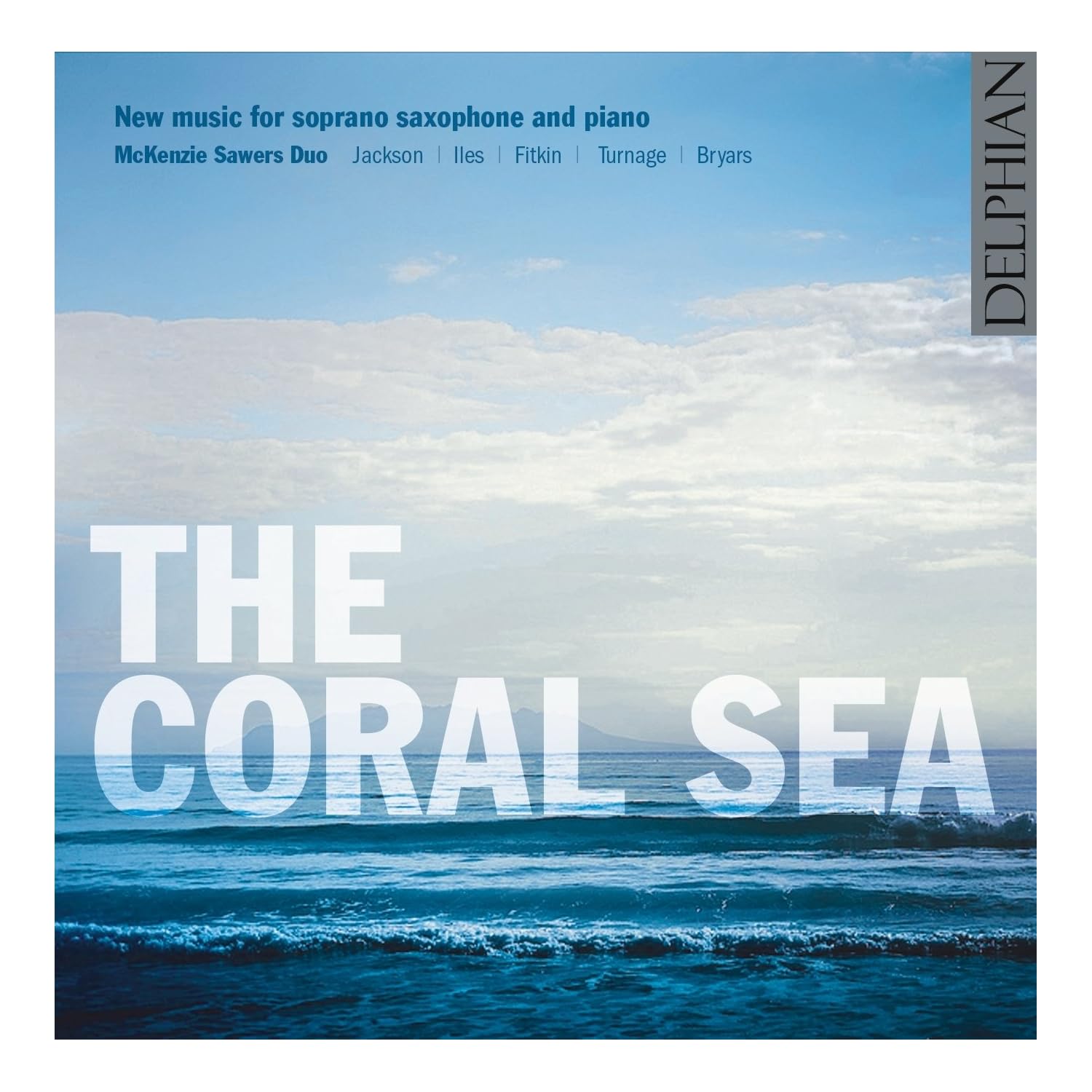
February 18, 2013 The Coral Sea Every now and then a record announces from the opening spin that you’re in for a really good time. Six works by five living British composers for soprano saxophone hardly sounds like an invitation to the dance, but the moment Sue McKenzie blows up the weird Caledonian wail of Gabriel Jackson’s title piece you just want to sit back and sip the smoky malt. Sue plays the sweetest, most serene soprano sax you will ever hear outside a jazz den. She is piloted through uncharted waters by Ingrid Sawers, piano. The Coral Sea sounds like it ought to: limitless, enchanting and implacable. Jackson, chiefly a choral composer, finds an almost-human timbre in the soprano sax and makes it sing and keen for all it’s worth. Graham Fitkin’s two pieces have a Mersey-like murk, somehow gloomy and yet a bit giggly at the same time. Nikki Iles, a composer I had never heard before, makes the sax sing nightclub languid and low in a piece called Alma Venus. Two Memorials by Mark-Anthony Turnage are too short by half, gone before they’ve broken the surface. But the concluding Allegrasco by Gavin Bryars is a world entire, a story that invents its own time and makes the second malt absolutely mandatory. The soprano sax is, unlike the operatic category, two sizes smaller than a tenor. It doesn’t sound that way. If you only buy one saxophone record this year, make this the one.
Three remarkable pianists: Cezara-Lucia Vladescu A classical pianist who has played at Carnegie Hall, Cezara last year won the public prize at the Montreux Jazz Competition. Her debut album, privately produced but available through all online outlets, takes teasing fragments of classical works and turns them into jazz meditations. The ear is taken in a single phrase from Bach to Chopin to Schumann to Cezara and the journey is altogether enchanting. This pianist demands to be heard live.
Caroline Sageman The youngest-ever finalist in the Warsaw Chopin competition, Sageman plays the Polonaises in mid-life as if they are her life’s purpose. Gone is the competitor’s showiness. What we hear is a mind and a set of fingers plunging ever deeper into Chopin’s textures in search of an elusive truth. Set beside recent showboaters, this is Chopin from the source.
Maria Joao Pires No grandmother pianist has sounded so curious and clear-sighted as Pires does in this ear-opening pair of two Schubert sonatas (D845 and D960). Just when you think you know all that can be done with these mine-shafts of introspection, Pires inserts a dimension of surprise and wisdom that will make you rethink everything you thought you knew about the music.
February 4, 2013 Scarlatti Illuminated Domenico Scarlatti was born in 1685 and overshadowed by two giants who shared his birthday year, Johann Sebatian Bach and George Frederic Handel. Worse luck, instead of staying home in Naples and writing operas for rich traders as hus father did, Domenico veered off to the relative obscurity of Portugal and Spain where, working for the royal families, he turned out exactly 555 solo sonatas for the harpsichord. This was not a good career move. Excess, in music, is a natural deterrent. The public will never tolerate 555 of anything, so it is little short of a miracle that some music by Scarlatti junior was taken up by 19th and 20th century virtuosi, adapted for the heavier sonorities of the grand piano and often used as a first encore to help the audience settle down after the big showpiece. Two famous soloists, Carl Tausig and Ignaz Friedman, made modern transcriptions of Scarlatti pieces; and Vladimir Horowitz was prone to slip Scarlatti into the gap between Scriabin and Prokofiev. What this album does, as none before, is give us the chance to hear both baroque and romantic-style Scarlatti, played side-by-side on a concert grand. It’s quite a ride. At 24 years old, Joseph Moog knows no fear. He takes the virtuosic slaloms eyes wide open and then reins back without brakes for the onset of baroque curlicues. I have a feeling we’re going to hear much more of Moog. German born, he has an original turn of mind and an impressive technique. The music is never less than unexpected, with an occasional wistful quirk that hints at might-have-beens. Contrary to the usual rules, this album could be a career-making release. >Buy this CD at Presto Classical
Three fine cellists Quirine Versen An obscure sonata by a 19 year-old Kurt Weill, remarkably mature, leads into the equally unplayed opus 1 by Hans Pfitzner and the well-known romantic sonata of Samuel Barber. The dialogue between Versen and her pianist Silke Avenhaus is quiet, almost gossipy, making you want to listen all the more closely for nuance.
Christian Poltera Pairing the Barber cello concerto with his sonata may have seemed a brilliant programming idea, but it’s too much of a good thing. The Swiss cellist plays a notably rich-sounding Guarnerius, too rich for this austere rep. Katherine Stott accompanies the sonata, Andrew Litton conducts the concerto. Even with an added Adagio for strings, the album offers less than an hour of music.
Jakob Kullberg Danish and brave, Kullberg plays three concertos by living Nordic composers – Per Norgard, Arne Nordheim and Kaija Saariaho. Nordheim’s in a single movement, is easiest to grasp; the other two require deep concentration. Kullberg plays with blithe satisfaction, as if they were Haydn. The New Music Orchestra are conducted by Szymon Bywalec.
January 27, 2013 Andrzej Panufnik: Symphonies 7 & 8 Poland’s most successful composer fled to the West in 1954, settled in a London suburb and, with the Thames lapping at his cabin doorstep, wrote for the first time without fear or political pressure. Under Nazi occupation, Panufnik had played four-hand piano recitals in underground cafés with his friend Witold Lutoslawski. Under Stalinist rule, he was forced by the commissars to write big tunes and wear a broad smile. His early symphonies can sound a tad simplistic. In London, he became his own man, creatively and intellectually. His works became complex in the best sense of the term, expressing an idea that has been clarified to the nth degree by an independent, questing mind. The music may not always sound easy on the ear, but it is never less than fascinating and readily comprehensible. The 7th symphony, titled Metasinfonia, is an organ concerto with lots of work for the timpani and a sense of struggle that leads to redemption. The 8th, Sinfonia Votiva, was commissioned by the Boston Symphony Orchestra and premiered with Seiji Ozawa in 1982. Dedicated to the Black Madonna of Czestochowa, it anticipates the religious revolt that toppled communism and reunited Panufnik, near the end of his life (he died in 1991), with Poland. A third work here is the Concerto Festivo for the London Symphony Orchestra, advertising its solo v irtuosities in much the same way that Bartok does in his Concerto for Orchestra. There is not a dull moment on this album, the fifth in a series that Lukasz Borowicz is conducting for the 2014 composer’s centenary. The Konzerthaus orchestra of East Berlin play with unthrottled passion, in stunning sound.
Three radio retrievals Klaus Tennstedt Bruckner and Mahler were Tennstedt’s prime specialities; who’d have imagined he would be so profound and evocative in the fourth symphony of Bohuslav Martinu? Tennstedt liked to say that he had a touch of Czech in him, but this is an interpretation to rank with the great Ancerl, penetrating a luminous sound world. It is paired with a glorious, ruminative performance of Brahms’s first, both played by the SWR Stuttgart Radio.
Geza Anda In an age of great pianists, the unassuming Hungarian gets unfairly overlooked. His account of the 2nd Brahms concerto (Otto Klemperer conducting) packs a massive punch – the kind of power you’d expect from Russians. The Tchaikovsky concerto, by contrast, he plays with an almost airy nonchalance and breath-taking subtlety (Georg Solti conducting). Absorbing interpretations with the orchestra of Cologne Radio. The soloist smokes a cigarette on the cover.
Hans Rosbaud One of the post-war pioneers of Mahler and modernism, a role model for Pierre Boulez, Rosbaud (1895-1962) remains near-unknown beyond German borders. His 1951 broadcast of Mahler’s fifth symphony from Cologne was a national ear-opener. On record for the first time, it is a persuasive performance if a little old-fashioned and too brisk in the Adagietto. The mono sound is too constricted for general pleasure.
January 20, 2013 Dinu Lipatti: Piano music The Rumanian pianist, who died tragically young of Hodgkin’s Disease in 1950, left some of the most intuitive and penetrating Chopin interpretations that exist on record. Like Chopin’s, Lipatti’s death at 33 overlaid his image with a false frailty, his name mentioned in hospital whispers. Yehudi Menuhin said he was ‘the manifestation of a spiritual realm, resistant to all pain and suffering.’ Yet there was nothing ethereal about Lipatti who remained, to the end, a virile, robust player with a decidedly modern outlook. Between ne recital and the next, he composed in a vivacious style, more for pleasure than posterity. This exploratory double-album contains a good deal of music that has never been recorded – or enjoyed - before. A Concertino, dated 1936, was clearly written to impress his Paris teacher Nadia Boulanger, the world’s foremost champion of Stravinsky’s neo-classical style. In it, Lipatti mimics and faintly mocks Stravinsky’s 1929 Capriccio, one of the most entertaining works of the epoch. Like an overly erudite classical DJ, Lipatti tosses in bits of Bach, Haydn, Enescu and Bartok, playing spot-the-composer with gleeful abandon. The 18-minute confection is fizzingly well played by pianist Luiza Borac and the Academy of St Martin-in-the-Fields, conductor Jaime Martin, a fun piece for social occasions. Borac, a convinced Lipatti revivalist, takes us on through a sonata, a sonatine, a nocturne and a large fantasie, each of them original and derivative in equal measure. She follows up with Lipatti’s sparkling encore transcriptions of works by Albeniz and Bach. Evangelist though she is, Borac makes no excessive claims for this music beyond its simple attractions and wilful optimism. You will feel much the happier for hearing it.
Three Mozart CDs David Greilsamer The Israeli pianist-director takes crisp, bright tempi in the 23rd symphony and Jeunehomme concerto with the Geneva Chamber Orchestra, following up with something called In-between. This is a world premiere of a 10-minute work for string quartet and orch by Denis Schuler, a wispy, whispery thing that tickles the ears like a night breeze before a Mozart overture as finale. Nice idea, doesn’t quite set the house alight.
The Mozart Sessions The Austrian pianist Markus Schirmer joins Boston ensemble A Far Cry in two concertos (K414-5) and a beefed-up sonata, all adorned with his own lead-ins and cadenzas. The playing is a bit breathless and there’s an edginess to the ensemble, but ears reared on rock music might well be captivated.
Geza Anda The Hungarian pianist, who died young in 1976, recorded these two concertos (K453, 488) with the radio orchestra in Baden-Baden. The sound is a tad boxy and recessed but the Mozart style needs no commentary. Organic, gimmick-free, it lets the music speak for itself. He also gives a scintillating performance of the Ravel G-major concerto.
January 15, 2013 Elgar, Carter: cello concertos Ever since a long-haired blonde with a raging migraine entered a dungeon studio 48 years ago to play the Elgar cello concerto, the beat-that recording has been Jacqueline du Pré’s on EMI. Musicians sensed it on that hot August day in 1965, converging from all over town on a whisper that something extraordinary was going on at Kingsway Hall. And the primacy of that performance was confirmed when Mstislav Rostropovich, the cellist’s cellist, refused to record the Elgar on the grounds that Jackie had made it her own. Many have since had a shot, and fallen short. Not on thoughtfulness or skill – Natalie Clein and Paul Watkins are two fine recent interpreters – but in shaking off the shadow of a 20 year-old girl who found an intuitive understanding of an old man’s lament for a life destroyed by the first world war. Alisa Weilerstein is the first cellist I have heard who plays the concerto as if Jackie never lived. Her entry is marked by a distinctive restraint, a refusal to make the big statement until the narrative is in full sway. Phrase by phrase, she takes us away from the terror and the pity and deep into a golden beauty. She does not so much detach the concerto from Elgar’s time as give it a greater relevance to present fragilities, of society teetering on the edge of change. I find her reinterpretation utterly convincing. It is all the more daring for having, as conductor, none other than Daniel Barenboim, who was first married to du Pré, and an orchestra, the Berlin Staaskapelle, that has no roots in Elgar and his sound world. Against all odds, it works. The pairings are even bolder. Weilerstein takes on and breathes life into a phlegmatic concerto by the centenarian American modernist Elliott Carter, a work of wisps and flutters and dark rustlings in the night. And she winds up with an irresistible reading of Bloch’s supplicatory Kol Nidrei, a fusion of ancient fears into eternal hope. For sheer courage, strong convictions and fabulous playing, nothing less than five stars will do.
Three young pianists David Fray Two Bach partitas, separated by a toccata, played on a modern piano with a dreamy air and no regard for political or academic correctness. Ten years ago, no serious label would have dared deny the dogmas of historically informed performance (HIP), but Fray is one of a new breed who play Bach as they feel it should sound, not as some professor has decreed it must. This is Bach rich in fantasy and spontaneity. Don’t ask permission. Just listen. You’ll want more.
Javier Negrin The little-known travel preludes of Alexander Scrabin, dating from the 1890s, sound more Mediterranean than Russian and the performer seems to need more than the average number of fingers and feet. Negrin, a Spanish pianist, tells a beguiling adventure story, rich in thrills and spills, and in a slightly swoony sound that is just right for these pieces.
Denis Kozhukhin Winner of the 2010 Queen Elisabeth Competition, Kozhukhin plays three sonatas by Serge Prokofiev (nos 6-8) with intense power and concentration but none of the ominousness that these wartime works require. Some may warm to Kozhukhin’s an-historic neutrality; I couldn’t.
January 2, 2013 Mauricio Kagel/Alexandre Tharaud Contemporary Classical is the biggest turnoff in the music rack. Most people seem to think it is either going to hurt their brains with complex theorems or numb their ears with repetitive simplicity. Often, they are right. Sometimes, they are missing out. Mauricio Kagel (1931-2008) was an Argentine-German double-exile who could not resist poking sticks at the sacred cows of classical music. In Ludwig van, a 20-minute piece for small ensemble, he takes fragments of Beethoven’s most famous works and juxtaposes them with intrusive noises, bad singing, running water, false solemnity and all the tricks that post-modern art uses to smash the glass cases of museum culture. As a piece of satire, Ludwig van is an important statement, all the more timely on the eve of the Verdi-Wagner year. As a piece of music, it is good fun. As a work of art, you just want to own it. Composers like Kagel, who live outside safe categories, live in the hope that a major star will play their esoteric stuff. Kagel got lucky. He ran into the French pianist Alexandre Tharaud, a Chopin specialist who is not afraid of novelty or things go bump on the floor. Among other delights on this thrillingly wacky album is a work for metronome and piano and another, perversely, for three hands. I would have given the album five stars for the pleasure it has give me, but for a sudden anxiety that men in white coats might come to drag me away for liking such forbidden stuff.
3 underplayed symphonies Allan Pettersson’s 6th A Swedish outcast, living on the poverty line, Pettersson is the most original Nordic symphonist after Sibelius and Nielsen. Here, as is his wont, he starts in darkness and feels his way, an unbroken hour later, to light. Few modern symphonists create or sustain so gripping an atmosphere, and Christian Lindberg’s performance with the Norrköping Symphony is by far the best on record. I have listened to it, end to end, five times.
Witold Lutoslawski’s 2nd Trapped between Communist expectation and his own modernist inclinations, Lutoslawski walked a high wire in the nervous Sixties. His two-movement 2nd symphony is so jittery at times that he called the first section ‘hésitant’. It isn’t: Edward Garder conducts a commanding performance with the BBC Philharmonic. Luto’s cello cocerto, written for Rostropovich is, if anything, bleaker. Paul Watkins is the austere soloist.
Mieczyslaw Weinberg’s 19th By 1985, the prolific Russian had reached his 142nd work and was repeating himself. There are some glorious passages in the 19th, many reminiscent of his friend Shotaskovich, and blazingly performed by the St Petersburg State Symphony, conductor Vladimir Lande. But the intensity does not equal that of Weinberg’s Mahlerian 14th.
December 16, 2012 Frans Bak: The Killing For all the newspaper blether about an actress in a sweater and the irresistible charm of grey Danish dawn, vital elements in the compelling TV thriller have passed almost unnoticed – as if they were clues missed by detective Sarah Lund as she waves her torch down another dark tunnel. We’re talking music here. The soundtrack of The Killing was composed by Frans Bak, a conservatory-trained musician who used to be a bandleader on Danish television and later wrote lots of product commercials before settling for the long-form movie score. Bak works alone at an electronic desk, mixing sounds of his own invention. The only other musician credited on this soundtrack album is a hypnotic, low-voiced Swedish singer, Josefine Cronholm. For the opening titles, Bak creates a Ligeti-like Atmosphères underpinned by a percussive throb that might have come from the young Steve Reich and a brooding orchestral surge with roots in mid-Sibelius. The resultant fusion, however, finds a distinctive signature which, in turn, becomes indistinguishable from the gripping, questing ambience of the unfolding story. A complex rhythm, unremitting throughout, is a key structural element in the series. The soundtrack called to my mind Bernard Herrmann’s music for Alfred Hitchcock, two seconds of which suffice to evoke a screen situation. I was pleased to read online (the album has no sleeve notes) that Bak regards Herrmann as a role model. That’s encouraging at a time when film is losing its musical literacy and it augurs well for the future of Danish drama. Listen to any track on this chilling disc and you’ll be lost in the murk of a plot, as indelible as the graveyard scene in Hamlet.
Three past legends Ataulfo Argenta The Spanish conductor was soaring high on 1950s Decca when a domestic accident caused his death at 44. This account of Beethoven’s Eroica and Smetana’s Bartered Bride overture exemplify his electrifying effect on familiar music, even with second and third rank orchestras.
Clara Haskil Far from the heart of her repertoire, the Rumanian pianist skips and shimmies through Falla’s Nights in the Gardens of Spain, in a Paris performance conducted by Igor Markevitch.
Sviatoslav Richter He cancelled more often than he played, and every date he kept lives on forever. This is a June 1975 Beethoven night at the Royal Festival Hall, two sonatas separated by a pack of Bagatelles. Richter, once he grips the attention with the opening bars, never lets go. But for an idiot yelling ‘bravo’ before the last chord fades, this record would be perfection itself.
December 10, 2012 Lebrecht’s Album of the Year Debussy: Clair De Lune 2012 was a bumper year – a bumper-to-bumper year – for vocal recitals. Most were fashioned along 1950s lines: pick six show-stoppers and pad them out with six more you hope the average listener (whoever that is) has never heard before. By September, I was having to pay the dustmen to cart them away. Apparently, unwanted CDs are used to pave new motorways. Next time you take a drive, count the singers beneath your wheels. And bumpers. On happier days, I was grateful to receive the complete piano music of John Cage on 18CDs, played by Stefan Schleiermacher on MDG, followed by the complete Arnold Schoenberg piano works on just one CD. Why did no-one think of that before? The set is on a new designer label, Odradek. The pianist is Pina Napolitano: you will hear more of her. I had more fun that was decent with Sony’s exhumations of the Glenn Gould sessions with Elisabeth Schwarzkopf, a record made in hell. And I was hugely beguiled by Hyperion’s 18th century Portuguese love songs. On that same label, Natalie Clein played the best Bloch Shelomo on record – yes, it was a bumper year, after all. And then along came Nicola Benedetti’s Silver Violin on Decca, an altogether original confection of movie-linked music and the ultimate antidote to formula releases. But when all’s done and dusted and the frost is thick underfoot, one album of 2012 stood out half a mile from the pile. Not much was heard this year from Natalie Dessay. The French soprano-actress had a run of opera cancellations and suffered the death of her manager, Herbert Breslin. In the early spring, she issued on Virgin Classics a recital of Debussy songs that I do not expect ever to hear bettered. Everything about this album is five-star: the pianist, Philippe Collard; the sound quality; the order of songs; and the tinted cover that takes us straight to the heart of Debussy’s world, where Ms Dessay weaves a spell of unremitting fascination. Some find Debussy intimidating and cold. In Ms Dessay’s interpretation, at once clinical and passionate, his immaculate little songs have the grip of a couturier’s window on the Champs Elysées. You are rooted to the spot.
December 3, 2012 Voyages-Reisen: music for viola da gamba My friends who produce and present breakfast programmes on classical radio in different countrties share a common dilemma. Play anything too fast or loud, like the march of the Toreadors from Carmen, and the sleep-fuddled audience will switch to talk radio. Play slow and too soft – Barber’s Adagio – and they’ll fall back asleep. So breakfast radio ends up with reams of unnamed Haydn symphonies interspersed with middle-of-road classics by also-ran French composers of the 19th century, a murky start to a dull day. Well, here’s a remedy for breakfast. The viola da gamba is an ancestor of the modern cello, only with six strings instead of four. Its resonance stirs remote connections. Played by the Austrian virtuoso Jakob David Rattinger, it offers both gentle awakening and enough of a brain charge to make you explore both sides of the French-German border in the age just before enlightenment. Rattinger, who broke onto record with a stunning survey of the 17th Frenchman Marin Marais (featured in the film Tous les Matins du Monde), takes pieces of Telemann, J. S Bach and Carl Friedrich Abel from the German side and matches them with the lesser-known Forqueray, d’Hervelois and and Demachy. The accents are varied, but the compelling voice is that of the instrument, evoking a civilisation we can barely imagine in sounds that make us want to get up and grab the day. Rattinger’s narrative playing could hardly be bettered, and the ever compelling Marais closes the album with a riveting Badinage.
Three Schubert CDs Complete symphonies Mark Minkowski’s early-instrument box with Les Musiciens du Louvre Grenoble feels organic in brown-rice ways that some may find deterrent. The tempi are very bright, but there’s always a faint asperity to the string tone that feels more hair-shirty than necessary. The numbering is also odd, adhering to an academic correctness that makes the Great C major symphony 8th rather than 9th in the sequence.
4th and 5th symphonies Faster than Minkowski but on the modern instruments of the SWR Stuttgart orchestra, Roger Norrington puts Schubert back where he belongs – on the dance floor. Quick or slow, every rhythm is strictly on the spot and irresistibly infectious. You may not be able to sit through this without taking a twirl.
C-major quintet The quartet with an extra cello has a star-strewn recorded history, but it has been a while since a performance as gutsy as this has come along, The Takacs Quartet, augmented by Ralph Kirschbaum, tackle the ambiguities of the late masterpiece with rare clarity and profound sympathy.
November 26, 2012 Fazil Say: Istanbul Symphony Turkey’s most charismatic classical musician is in trouble back home. An atheist, uncomfortable with rising Islamist tides, Say retweeted a derisory comment last year and found himself prosecuted for ‘insulting the values of Moslems’ – accused, in effect, of the medieval crime of heresy. His case will be tried in February. Say has gone into exile. A prolific pianist, widely recorded, Say is also an ambitious composer, rooted in the sounds and sights of his homeland. His symphony opens with a rush of waves, followed by a run of Mediterranean melismas. The movements are titled ‘nostalgia’, religious order’, ‘blue mosque, ‘merrily clad young ladies aboard the ferry to Princes Islands’, and so on. To the post-modern listener, this may appears to be a leisurely travelogue in the manner of Saint-Saens and Elgar, east meets west in a four-star hotel. The energy is powerful and the noise made by the Borusan Istanbul Philharmonic Orchestra very loud, but the music arrives about 120 years too late, a cultural anachronism. Others, less aware of musical trends, may be charmed. Less contentious is Herzafen, a concerto for ney (a kind of flute) and symphony orchestra. The throaty instrument adds a whispering authenticity and Burcu Karadag, the soloist, exerts a hypnotic attention. A German audience at the world premiere sound hugely enthusiastic. I wanted to hear it again, at once.
3 underplayed symphonies Allan Pettersson’s 6th A Swedish outcast, living on the poverty line, Pettersson is the most original Nordic symphonist after Sibelius and Nielsen. Here, he starts in darkness and feels his way, an unbroken hour later, to light. Few modern symphonists create or sustain so gripping an atmosphere, and Christian Lindberg’s performance with the Norrköping Symphony is by far the best on record. I have listened to it, end to end, five times.
Witold Lutoslawski’s 2nd Trapped between Communist expectation and his own modernist inclinations, Lutoslawski walked a high wire in the nervous Sixties. His two-movement 2nd symphony is so jittery that he called the first section ‘hésitant’. It isn’t: Edward Garder conducts a commanding performance with the BBC Philharmonic. Luto’s cello concerto, written for Mstislav Rostropovich is, if anything, bleaker. Paul Watkins is the austere soloist.
Mieczyslaw Weinberg’s 19th By 1985, when he wrote this symphony, the prolific Russian had reached his 142nd work and was repeating himself. There are some glorious passages in the 19th, many reminiscent of his friend Shotaskovich, and blazingly performed by the St Petersburg State Symphony, conductor Vladimir Lande. But the intensity does not match Weinberg’s Mahlerian 14th.
November 18, 2012 The Irish Piano Not many Dubliners know, and very few Muscovites will admit, that it was an itinerant Irishman who first put Russia on the world’s musical map. John Field landed in St Petersburg in the winter of 1902 and, over the next 35 years, served as a role model to rising musicians and as a roving ambassador of Russian culture. Mikhail Glinka, the cornerstone Russian composer, was briefly his pupil. Frederic Chopin, it is said, stole one of Field's devices - the nocturne. ‘The Irish Piano’ is a scintillating and sometimes whimsical recital that takes John Field as its starting point and spreads out across the whole of the island’s music, from bar songs, through a Samuel Barber tribute to the breezy post-tonalities of the present generation. Michael McHale, in St Peter’s Church of Ireland, Drogheda, strikes just the right tone of contemplative wonderment and mischievous mythology. Starting with a traditional air of his own transcription, McHale introduces John Field both through a pair of his own nocturnes and through two-little-known homages by the American Samuel Barber and the expatriate Irishman Arnold Bax, who went on to serve the English Crown as Master of the Queen’s Musick. In amidst the classical verities, there are short new pieces by the captivating Donnacha Dennehy, the challenging Ian Wilson and other young Irish composers who have lately been taking the world stage in disproportionate numbers. Ireland has mysteriously become a crucible of contemporary music. Fascinating from start to stop, this album has lovely stuff that you won’t hear anywhere else.
Three mezzo CDs Susan Graham: Virgins, Vixens and Viragos An unusually thoughtful star recital, running the gamut from Purcell to Sondheim and taking in such unfamiliar gems as Joseph Horovitz’s Lady Macbeth and Vernon Duke’s Ages Ago (if you can’t place Duke, he was Prokofiev’s best friend). Malcolm Martineau accompanies and the big vibrato is kept well in check. The virago, on the other hand, runs riot.
Joyce DiDonato: Drama Queens The queens are from baroque and early-classical operas, many of them obscure (Berenice, Queen of Palestine, anyone?), which allows Joyce to let rip with more decorations than an oligarch’s bathroom and more freedom than the US Constitution. Alan Curtis conducts Il Complesso Barocco with commendable discretion. If it feels a bit overwhelming, skip to track six for Handel’s chilling Cleopatra. The singing is in a class – a world – of its own.
Marie-Nicole Lemieux: Opera arias Ms Lemieux, a Canadian, is a contralto - a deeper, richer, more swoony type of voice than the general run of mezzos. She is good in Haydn and Mozart, gorgeous as Gluck’s Orfeo. Bernard Labadie conducts les violins du roy.
November 4, 2012 18th century Portuguese love songs Sharp-eyed readers will have noted that the last Lebrecht CD of the Week shot straight to the top of the UK charts. This week’s is designed for a more intimate purpose. Described by an 18th century English traveller as ‘the most seducing, the most voluptuous imaginable,’ the music of the Portuguese ruling classes appeared to cross all mortal barriers. It is, wrote William Beckford, ‘the best calculated to throw saints off their guard and inspire profane deliriums’. Do not say you have not been warned. It offers two points of musical reference. The first is courtly Europe in the last years before the French Revolution. Some of the melodies could be passed off for very young Haydn or Rossini. Italian influence is pervasive and a sonata by Domenico Scarlatti, who lived in Lisbon for ten years, does not feel at all out of place. But beneath the delicate bobs and bows surge the powerful motives of love and betrayal that one hears in modern Portuguese fado – the eternal yearning for love, allied to a weary recognition that it must fail. This expression of love’s futility is not cynical, as it might be in other cultures. On the contrary, love emerges all the stronger for its black-eyed realism. The diversity of the music holds your attention from start to finish, whether it is a soprano serenade with guitar-led ensemble or a lonely harpsichord plucking away in the noonday sun. Impatient listeners should skip to the second track, where they will be assaulted by duet virtuosity of a feline, Rossinian felicity. Sandra Medeiros and Joana Seara are the stunning sopranos; Zak Ozmo directs L’Avventura London. This, wrote Beckford, is ‘an original sort of music, different from any I ever heard’. Two centuries later, that estimate still holds true.
Three opera CD sets Strauss: Der Rosenkavalier The American soprano Renee Fleming and the German conductor Christian Thielemann are unassailable in this sweetmeat opera. Franz Hawlata is the bullish Ochs, Diana Damrau the silky Sophie. My only cavil is the playing of the Munich Philharmonic at the Baden-Baden Festival, fifty calories less sweet than the Viennese.
Mozart: Don Giovanni Ildebrando D’Arcangelo is the rampaging Don, Rolando Villazon the Ottavio, Diana Damrau and Joyce DiDonato the two Donnas in another Baden-Baden production. Much of the singing is thrilling (DiDonati with added chill). The Mahler Chamber Orchestra offer slightly sterile accompaniment under the baton of Yannick Nézet-Séguin. It may have worked better on stage than on record.
Smetana: The Bartered Bride One of Mahler’s favourite operas has lost its foothold in the regular repertoire, perhaps due to its bucolic naivety. Jiri Behlolavek conducts an all-Czech cast – Dana Buresova outstanding as Marenka – in a London concert performance at the Barbican with the BBC orchestra and chorus. The sound is rather dry, but the enthusiasm is infectious. You’ll be whistling it for weeks.
October 14, 2012 Anu Komsi, Coloratura Vanity apart, there are only two credible reasons for releasing or reviewing a solo vocal recital. Either the music must be unfamiliar and powerful, or the singer must be possessed of a voice so extraordinary that there is no better way of appreciating it than in this concentrated form. Anu Komsi’s recital fits both bills. Komsi is a Finnish artist who plays roles no other soprano can reach, manily because they are way out of their league – too high, too complex, too dangerous. She’s had roles written for her in operas by George Benjamin, James Dillon and Peter Eotvos and she has a summer festival on the west coast of Finland that regularly cuts the edge. She is conducted here (with the Lahti Symphony Orchestra) by her husband, Sakari Oramo, chief conductor of the Stockholm Philharmonic and the BBC Symphony. The opening track, a wordless concerto for coloratura and orchestra by the half-forgotten Russian Reinhold Glière (1875-1956), s a guaranteed window-breaker – high, loud and a perfectly lovely assault on the senses. It is followed by the mad scene from Ambroise Thomas’s opera Hamlet and the outworn Bell Song from Delibes’s Lakmé, once dragged through an airport in a British Airways ad yet here sounding rejuvenated. I could have done without the Queen of the Night aria from Magic Flute, written for Mozart’s sister-in-law; nobody ever saves their best work for the in-laws. It does nothing to prepare your ears for the exhilarating wackiness of John Zorn’s 11-minute monodrama, La Machine de l’etre, a track that puts Komsi in the Cathy Berberian bracket of versatility. She closes, serenely on home turf, with Sibelius’s Luonnotar. The disc is more than the sum of its parts. It presents a unique artist, uniquely in her element. Of how many records can you say that?
3 violin concerto CDs Berg, Brahms Renaud Capucon’s account of the sombre Berg concerto, written in memory of a dead teenager, goes straight to the top of the pile. Making no concession for atonal asperities, it treats the work for what it is – a romantic concept in a modern form. The Brahms is sweetly done, if less decisive. Daniel Harding conducts the Vienna Philharmonic.
Schumann Schumann wrote a violin concerto his friend Joseph Joachim that went missing for 80 years. It lacks the warmth and conviction of his cello concerto and Anthony Marwood’s austere interpretation adds little to its charms. Nor is the violin adaptation of the cello concerto, played here by Marwood with equal severity, a match for the lush original.
Mendelssohn Alina Ibragimova is fast, lean and edgy in the famous E minor concerto, pitched against the organic timbre of the Orchestra of the Age of Enlightenment, conducted by Vladimir Jurowski. A refreshing change from over-sweet accounts, it will not be to everyone’s taste. In the earlier, less-played D minor concerto, the orchestra sounds idiomatically more comfortable and the soloist is scarcely challenged.
October 7, 2012 Miklos Rozsa: violin concerto, &c. A Hungarian, penniless in 1930s Paris, Rozsa took a tip from the Swiss composer Arthur Honegger to try his hand at film. He called his compatriot Alexander Korda, who had a studio outside London and got started composing a routine epic, Knight Without Armour. When war broke out in 1939 Korda moved The Thief of Baghdad to Hollywood and took Rozsa along to finish the score. It was the composer’s gateway to heaven. Over the next four decades, Rosza scored 90 movies, including Spellbound, Ben Hur and Julius Caesar. With Erich Wolfgang Korngold and Franz Waxman, he defined the orchestral language of film. Like Korngold, however, he craved respectability and continued to write concert works, often reusing themes from his movies. Like Korngold, he composed a concerto for Jascha Heifetz that the great violinist adored and the critics uniformly deplored. Both are fine works, expertly wrought and easy on the ear. But while the Korngold concerto has soared with half a dozen recordings over the past couple of years, Rozsa’s has remained obscure. It is an original work, untouched by Hollywood (though Billy Wilder later asked Rozsa to work it into the soundtrack of The Private Life of Sherlock Holmes). This new interpretation by the young British violinist Jennifer Pike is the most apeealing I have heard since Heifetz. Pike is terrific with the opening movement fireworks and tender in the gorgeous Lento movement. The furious Hungarian rhythms of the finale belong to Bartok, whom Rozsa knew well. At times, the concerto feels like the work of an equal master Rumon Gamba conducts the BBC Philharmonic in exemplary Chandos sound. The filler pieces are Rozsa’s neo-classical Concerto for string orchestra and an earthier Theme, Variations and Finale. Enjoyable stuff, can’t think why it doesn’t get played more. >Buy this CD at Presto Classical
Symphonic CDs Scriabin: Symphonic works The Russian composer has fallen so far out of fashion that to hear his music is like revisiting the old Soviet Union. These 1960s recordings, conducted by Evgeny Svetlanov, are vividly atmospheric, expertly played, in pellucid sound – an almost-guilty pleasure.
Tchaikovsky: symphonies 1-3 Once you suspend scepticism at the naivety, there is much pleasure to be had in Tchaik’s Winter Daydreams and the Little Russian and Polish symphonies. The LSO are on cracking form, with shimmering woodwind solos shaped by Valery Gergiev’s flutter fingers and some sumptuous ppps. This may be the most tempting interpretation since Karajan’s blue-box set of the 1970s… now, there’s a vanished world.
Rachmaninov 2nd The big romantic surges at the start of the first and third movements need taut baton control. Evgeny Svetlanov is exemplary with the Philharmonia in a live 1993 recording. Vasily Petrenko is a little more relaxed with the Royal Liverpool Philharmonic but the outcome, far from indulgent, is more likeable. The big clarinet solo on both CDs is sensational. Try both.ebay
October 1, 2012 Glenn Gould: The Schwarzkopf Tapes This is the kind of worst-ever record that producers dream up drunk and forget by morning. Except, in this case, they decided to make it. Putting the perfectionist German soprano Elisabeth Schwarzkopf in a studio with the outwardly chaotic Canadian pianist Glenn Gould was a mismatch of Olympian dimensions. All they had in common was a passion for the songs of Richard Strauss, regarded in the mid-1960s as a romantic dinosaur. Gould considered him a genius; Schwarzkopf had known the composer quite well. Beyond that, the pair were chalk and cheese. Schwarzkopf, recalls producer Paul Myers in a booklet note, thought she was getting an expert accompanist to her exquisite voice. Gould thought he was the centre of attention. The soprano turned up in a New York studio in January 1966 with her control-freak husband, Walter Legge. Gould like his studio stifling hot. Schwarzkopf said heat killed her voice. The pianist refused to discuss tempi and interpretation before they got to work. At breaks, he showed no interest in shared listening of the recorded takes. While Schwarzkopf and Legge frowned over replays behind the glass wall, Gould carried on playing the piano. Schwarzkopf stuck to the printed score. Gould went off on riffs. The third day of sessions was cancelled by mutual consent. Fourteen years later, three songs were released in a Gould jubilee album. Three more were considered unpublishable. They are issued here for the first time. Worth hearing? Indispensably so. The strain on Schwarzkopf’s glittering instrument is audible at both top and bottom, but the faint patina harshness endows her voice with endearing warmth. Gould’s opening passages – especially in the torch-song Morgen – are straight out of dreamland, a set of fantasies on a near-imaginary Strauss that smash the glass windows of literalist protectionism. In the closing lines Schwarzkopf can barely be recognised as herself, extended as never before by a creative competitot. In between the two triptychs of songs, Sony have packed Gould’s Toronto performance of Strauss’s concerto-like Burleske, together with a 15-minute Gould rehearsal in which he growls along to his playing, finishing up with the comment: ‘OK, not bad. But not good.’ Utterly inimitable.
September 24, 2012 Mendelssohn: Elijah From its first performance in Birmingham Town Hall in August 1846 and for many decades after, Mendelssohn’s Elijah was considered the equal of Handel’s Messiah - certainly the most significant and spiritual work of music composed in England since time immemorial. Its grip on the public ear faded as world wars turned Sunday churchgoers into disillusioned sceptics. Over time, it has receded to an occasional performance. The flaw in Elijah is that is lacks the innate optimism and the massive singalong appeal of Handel’s masterpiece. The atmosphere is dark, and sometimes heavy. Mendelssohn in his set pieces for four voices, chorus and orchestra can sound as if he is straining to hard to please God, man and good Queen Victora all at the same time. So sensitive was the composer to the sensibilities of his prudish audience that he completely excised the massacre of the priests of Baal, which was the apotheosis of the prophet Elijah’s revelation and redemption. This oratorio needs more blood and guts. In a far-from-crowded field, Paul McCreesh’s recording, made at the Watford Colosseum and Birmingham Town Hall, does the crowd scenes extremely well. The soloists are a power-pack – Rosemary Joshua, Sarah Connolly, Robert Murray and Simon Keenlyside – the Gabrieli Consort play with vim and vigour. The sundry choirs deserve full credit: the Wroclaw Philharmonic Choir, Chetham’s Chamber Choir, North East Youth Chorale, Taplow Youth Choir and Ulster Youth Chamber Choir. The only drawback is the shelf-consuming thickness of the accompanying book, which is studded with pointless photos from the recording sessions (who needs to see a horn player with his eyes popping out?). Nicholas Parker’s sound production is exemplary.
3 concerto CDs Benjamin Grosvenor The 2nd Saint-Saens concerto, the Ravel G-major and Gershwin’s Rhapsody in Blue, performed by the young English pianist in descending order of effectiveness. The Saint-Saens is the most eloquent I’ve heard in years, the Ravel is very good and the Gershwin would benefit from a richer cultural perspective. Short solos between the pieces are nonchalantly tossed off by a young artists who has technique to spare. James Judd conducts the Royal Liverpool Philharmonic, who sound in great form.
Mitsuko Uchida Conducting the Cleveland Orchestra from the keyboard in two Mozart concertos (K271, K467), the great pianist does not sound wholly comfortable. Orchestral tutti are a little heavy and the pianism lack the flinty certainty of Uchida at her finest. Try Geza Anda and the Mozarteum orchestra in the 'Elvira Madigan' concerto on DG and you'll glimpse what can be achieved when a pianist and ensemble speak with one voice.
Leif Ove Andsnes The Norwegian manages the double role of pianist and director persuasively with the Mahler Chamber Orchestra. The first release in this cycle pairs Beethoven’s 1st and 3rd concertos. The less challenging C major concerto receives an affectionate reading, while the C minor achieves high tension and revolutionary fervour of a very rare order, before going off on a dancing riff. Andsnes seldom does what you expect and the sound, in Prague’s Rudolfinum, is exemplary (the producer is the EMI veteran John Fraser).
September 17, 2012 Jon Lord : Concerto for group and orchestra So many fading pop stars have sought to revive faltering careers in the classical sector that the term ‘crossover’ has become synonymous with sell-out. Jon Lord was never that. The Deep Purple founder was classically trained and passionate about keyboard instruments. He blended a Hammond organ into the band’s trademark sound and, unusually for his time, focussed more on live concerts than on recording. The first performance of his classic-rock fusion concerto was conducted by Malcolm Arnold, one of England’s most successful symphonists, and the influence of Arnold’s effortless tune-making is audible intermittently through the three movements of this remarkable work. Lord played the concerto more than 30 times with different orchestras and conductors before deciding to make a studio recording with Paul Mann, who had directed the work on tour. The Royal Liverpool Philharmonic was engaged for the sessions along with some hardcore rock band members. In the last weeks of his life (he died of pancreatic cancer in July), the composer was able to supervise and approve the final takes. So what kind of work is the concerto? It’s a classically structured work with flashes of very loud rock playing and two stretches of ballad singing that, while agreeable, disrupt the cogent flow of instrumental conversation. The Hammond organ adds a unique nasal undertow and the propulsion of rhythm and ideas never flags. This is probably a work best heard where it was first played – in the Royal Albert Hall, London – but the recording is a precious relic of a time when music knew no barriers and the future held an infinity of hope.
3 Mahler CDs 1st symphony The pulse in this performance by Marin Alsop and the Baltimore Symphony is inconsistent from one movement to the next. Irony is crucially missing from the third movement. The live sound (Tim Handley) is rich and transparent and the orchestra is on great form, but the interpretation is unconvincing.
1st symphony Cologne’s Gurzenich orchestra learned to play Mahler with the composer himself. Its sound has an unassuming authenticity and the narrative is confidently driven by Markus Stenz, a little too fast at times and without a trace of the underlying ironic contradictions. The brass playing, though, is supersonic.
2nd symphony Myung-Whun Chung’s tempi are exemplary and the Seoul Philharmonic playing is ferocious, yet note-perfect. Doubts nag in the low strings of the andante and the Röschen soloist, Myung Joo Lee, wallows in her own vibrato. But the interpretative line remains tight throughout and four Korean choruses deliver a mighty resurrection. >Buy this CD at Deutsche Grammophon
September 10, 2012 Stephen Hough: French Album The English pianist is so much a law unto himself that if he decides a piece is French we must take his word for it. Only Hough would dare to kick off a so-called French Album with two pieces by Johann Sebastian Bach and end it with one by Franz Liszt. How French is that? The justifications, if such things are needed, are that the Bach solos he plays are arrangements by the austerely Gallic Alfred Cortot and the Liszt is a compilation of themes from Halévy’s La Juive, arguably the cornerstone of romantic French opera. In between, Hough strings a sterling-silver chain of jewelled morsels by Fauré, Ravel, Massenet, Chabrier, Poulenc, Debussy, Delibes and Cécile Chaminade. Mostly, such pieces send me back to sleep when played as fillers on BBC Radio 3’s Breakfast programme. The Faurés, I’m sure, Hough can play in his sleep. Here, however, he presents each amuse-bouche as a banquet in itself – integral, entire and altogether satisfying until the ear remembers that it is empty and demands more. There is never a risk of torpor on this CD. In the thick of exquisite tidbits sits a four-minute masterpiece of commanding solemnity – a prelude by Charles-Valentin Alkan that stops time in its tracks and makes you wonder how anyone, anywhere, could compose music in any other form. Alkan was a recluse, found dead in his Paris apartment beneath a collapsed bookcase, his parrot still chirping. His works demand formidable hands and his advocates have been few: Busoni, Edwin Fischer, Ronald Smith, Olli Mustonen, Marc-Andre Hamelin. Hough, in La chanson de la folle au bord de la mer announces a new contender in the Alkan championships, a striking intelligence applied to the most intellectually challenging of 19th century keyboard masters.
Three contemporary CDs Michael Shapiro: Variation The New York composer has written two sets on Jewish Sabbath hymns, one for solo cello (Sato Knudsen), the other violin (Tim Fain). Both marry lyricism to the mathematical logic of the variation form – and do so with charm, boldness and a winsome wit.
Lowell Liebermann: Little Heaven Another New Yorker, Liebermann pulls off the considerable feat of setting the Holocaust poet Nelly Sachs without maudlin modes, his notes as sparing as her words. Brenda Rae is the soprano. Rae is joined by baritone John Hancock, with William Hobbs at the piano, in two further cycles. Tough, original writing – just as I like it.
A Different World - Contemporary Music for Solo Violin & Piano Baltic composers (Barkauskas, Salonen, Bacewicz) and some others are plinked and played on violin and piano by Diana Galvydyte and Christopher Guild. Some may find it a tad wintry, but Balsys’s evocative Lament and James MacMillan’s two pieces are well worth the admission price.
September 3, 2012 Bononcini: Messa, Stabat Mater The cover of this CD had me quivering with righteous outrage. Bononcini is one of the bad boys of music history. He came to London around 1720, stole Handel’s aristocratic patrons and half his audience and left him at the very edge of bankruptcy. Like Salieri with Mozart, Bononcini did enough to drive a great composer to drink and distraction without leaving works of his own that might justify his intrigues. Like Salieri, Boncini earned prolonged and richly deserved oblivion. I have never knowingly listened to a note of his music, the rotter. That, however, was Giovanni Battista Bononcini.(1670-1747). This present disc contains two liturgical works by his kid brother, Antonio (1677-1726), a Modena cellist who became Kapellmeister in Vienna in 1726. The music is very much of its time and type, soothing and reassuring rather than strikingly original, but many of the eight soloists’ vocal lines are beautifully turned and the cohesion that director Rinaldo Alessandrini achieve with the Concerto Italiano choir and orchestra is altogether impeccable. Recorded live at Vienna’s adventurous Konzerthaus, the music is seductive beyond all reasonable expectations. Silvia Frigato and Sara Mingardo are the standout soloists and the acoustic is near-perfect. When someone mentions Bononcini in future you’re going to have to ask, which one? >Buy this CD at Presto Classical
Three John Cage centenary CDs As It is Just when you think you know Cage, he springs a new surprise. The pianist Alexei Lubimov and singer Natalia Pschetnikova, veterans of a 1988 Moscow Cage-in, perform pieces for prepared piano and poems by e. e. cumming, Gertrude Stein and James Joyce. Stunning, simply stunning.
Jack Quartet The quartet of 1950 is not Cage’s finest half-hour and can, indeed, often seem a good deal longer. Written in quiet repetitions that anticipate the minimalism of the 1980s, the piece is chiefly of historic interest. That said, the Jack Quartet give it a taut, alert reading, between works of Ligeti, Pintscher and Xenakis.
Sonatas and Interludes ‘A ping qualified by a thud’ is how the conservative composer Virgil Thomson described these 20 pieces, but what did he know? Played here by James Tenney, who said they changed his life at age 16, they might well change your perceptions of the sounds it is possible to extract from a piano, prepared or otherwise. Almost definitive. >Buy this CD at Presto Classical
August 27, 2012 The art of instrumentation: homage to Glenn Gould Glenn Gould, who died in October 1982, would have been 80 next month. Alive, Gould was known as the quirky Canadian pianist who soaked his hands in boiling water before he touched the keys, and who played Bach as no-one else before or since. Since his death, frozen in time, he has acquired an aura of philosopher and saint, extolled for his gentleness and intellectual rigour, raised to cult status on record. ‘They shall not grow old as we that are left grow old…’ To perpetuate an artist’s legacy in a double-anniversary year requires more than repetitive homage, as record labels have learned to their cost. Gidon Kremer, the Latvian violinist and conductor, once spent a night in Gould’s studio with the Hungarian pianist Andras Schiff. He has commissioned a set of variations on Bach themes by contemporary composers whom Gould might, or might not, have liked. I am fairly sure Gould would have grinned at Alexander Raskatov’s string orchestra riff on the Prelude and Fugue in D minor, and there’s a pair of arrangements for solo violin and vibraphone that cut right to the heart of the Gould sound world. A piece called Bridges to Bach by the Georgian composer Giya Kancheli is the standout track. Its shimmering lines for violin, flute, oboe, piano and vibraphone against a string orchestra backdrop afford a meditative tour around the possibilities that Bach presents for the creative mind, a boundless resource for invention. The safer tracks on this CD are less successful. The most daring is a cross between five of Bach’s Goldberg Variations and two intermezzos from the works of Arnold Schoenberg, set by Steven Kovacs Tickmayer and giving the listener a constant expectation of challenge – just as Gould used to do. Rarely does a recording extend musical curiosity as much as this one does.
Three Tchaikovsky CDs Piano concerto #1 The Tchaikovsky Competition winner Daniil Trifonov makes light work of the great concerto, accompanied by Valery Gergiev and the Mariinsky Orchestra. Massive power gives way to the most delicate pianissimi and a constant sense of discovery. This performance is close to epic, diminished only by the solo encores – mostly Liszt settings of Schubert songs that somehow disempower the concerto’s impact.
Symphonies 4&5 The London Philharmonic is not, on present form, London’s pride. The woodwinds lack colour, the strings are mushy and the brass less forceful than it used to be. These are live recordings from the Royal Festival Hall, a smudgy venue, but the band should know the hall well enough to overcome its blight. Vladimir Jurowski conducts.
6th symphony The Seoul Philharmonic has risen under Myung-Whun Chung’s direction to world status and sounds ever better each year. Produced by Michael Fine, a former head of DG, this recording has bloom to die for and real depth of field in the aural illusion. Chung’s interpretation is classy and unfussy, carefully restraining pathos in the finale. The filler, Rachmaninov’s Vocalise, detracts more than it adds. >Buy this CD at Deutsche Grammophon
August 19, 2012 Nicola Benedetti: The Silver Violin The violin world is short of big beasts and big ideas at its summit. A handful of well-known soloists play the same old programmes ad infinitum and the new bloods are pressured by their agents to do much the same. So when one of the up-and-coming brood does something different, there is cause for applause. Nicola Benedetti won BBC Young Musician of the Year in 2004 at the age of 16 and was awarded a £1 million Universal contract for six recordings. It has taken a while for her playing to catch up with the hype, but recent concerts have been impressive and her new album is a considerable cut above anything she has done before. The Silver Violin presents music from and much it is shameless shmaltz, as you would expect. The surprise is that the selection is so intelligent and the running order so astute that the album acquires a personality far greater than its content. The central piece is the Korngold concerto in a finely judged performance, not perhaps as passionate as Capucon, Trusler and some other recent releases, but framed between two Korngold arias from Die tote Stadt, it gains a context in the composer’s pre-Hollywood life and an interpretation that is aptly rounded. The inescapable Schindler’s List theme by John Williams is deftly balanced by two laconic movie episodes from Dmitri Shostakovich. A student piano quartet by Gustav Mahler is included as the soundtrack to Shutter Island, while Howard Shore’s Concertino from Eastern Promises sounds even more exotic than it does on screen. Orchestral accompaniment is by the Bournemouth SO with Kirill Karabits and the sound (by K&A Productions) falls some way short of Decca’s best standards. What stands out here is the style and the sophistication of the soloist, along with the promise of more intriguing projects to come.
August 5, 2012 Clifford Curzon: the complete recordings Out of the London Blitz emerged two pianists of unusual sensitivity. Solomon, known by his first name alone, was possessed of powerful qualities of introspection. His playing was ended by a stroke in 1956, when he was 54 years old, and he is remembered by usurpassed recordings of the Grieg and Schumann concertos. Clifford Curzon, five years younger, wore a bespectacled, clerkish look that belied astonishing keyboard passion. Like Solomon, he is remembered for cornerstone recordings of the Grieg, but also of much else. Curzon was Decca’s number-one go-to pianist. A favourite of the irascible George Szell, he worked with maestros great and small, though his finest hours may well have been spent in chamber music. Among 24 discs in this bumper compilation, concertos abound. There are two releases each of the Grieg and the Beethoven Emperor and three of the Brahms D minor – each different in its magisterial way. The deeper you dig, the bigger the surprises. There’s a stunning account of the second concerto by Alan Raswthorne, paired with Falla, Litolff and Franck, as well as a totally unexpected piano obbligato on the third symphony of the Dutch composer Willem Pijper, conducted by Eduard van Beinum. Among the chamber music, a studio session with Vienna Philharmonic players on the Franck and Dvorak quintets is a delight from start to close, as are the two Mozart piano quartets that Curzon played with members of the Amadeus. His solo Schubert is in an ethereal space of its own. The box, a perfect browser, is a testament to an eternal artist and a test of the listener’s aptitude for the filigree distinctions of fine pianism.
Three French CD sets Jean Francaix: musique de chamber It’s the birth centenary of an archetype French composer, but the reassessment yields no fresh results. In these performances by Francaix and friends, what emerges is a beautiful civility and some delicious wind sounds, but nothing to frighten the horses. Octets, nonets, any combination of woodwinds and strings, lovely and ephemeral.
Debussy: chamber music with wind instruments The players are all French and the paying vivacious but too respectful for my taste. The piano version of the Prélude à l’après midi d’un faune is typically anaemic.
Messiaen: Turangalila symphony The most explosive account in years of Messiaen’s essay in sexual continence is performed by a Norwegian orchestra (Bergen) with a Spanish conductor (Juanjo Mena) and a British pianist and ondeist (Steven Osborne, Cynthia Millar). The pent-up energy is almost palpable, the playing superb and the sound quality (Andrew Keener/Simon Eadon) outstanding. Even a non-Messiaenist will be persuaded of this second coming.
July 29, 2012 Arnold Schoenberg: complete songs Song by song by Schoenberg is an album no-one has attempted before, and the more one spins through four CDs the more revealing it becomes. Who knew that the great revolutionary wrote so many little ditties, and of such trifling banality? Song, for Schoenberg, seemed to be the only musical education he ever got, a means of self-teaching. The earliest number in this set date from 1893, when he was a glum teen being sent to work in a bank. But rather than pitching for the pop charts or trying his luck with a sweet young girl, the composer is working from the outset to push the language of Brahms to its limits and be a serious contender. The result is often rather lovely – ‘You Turn Your Back on Me – as well as character revealing. Undeterred by lack of performance or romantic success, Schoenberg got married and carried on writing, extending his own boundaries with the Book of Hanging Gardens and the Cabaret Songs. He stopped writing songs at a seminal moment – the moment he inserts a song in his second string quartet in the summer of 1908, abandoning tonality and changing the course of music forever. He returned to the form only once more, in a 1929 commission to set four German folksongs, which came at a time that Schoenberg was starting to define his place in the history and tradition of German music. Song is peripheral to his reputation but, gathered together, the songs show how he became the composer he is. The singing here is accurate, beautiful and exemplary. Claudia Barainsky and Melanie Diener are the sopranos, Anke Vondung the mezzo, Christa Mayer the contralto, Markus Schäffer the tenor and Konrad Jarnot the head-and-shoulders standout baritone. Urs Liska accompanies, and the sound could not be better. Throw out your old recordings of Schoenberg songs: this is the set to have.
3 piano concerto CDs Adolf Wiklund Never heard of him? Wiklund (1879-1950) is number 57 in Hyperion’s series on the Romantic piano concerto. His first effort opens so assertively that you’re tempted to imagine a masterpiece might follow. It doesn’t, but the listening’s easy. Martin Sturfält plays, Andrew Manze conducts the Helsingborg SO.
Schumann Angela Hewitt’s mastery in Bach and Mozart does not transfer readily to heavy-handed romantics. Her phrasing is lovely but she seldom subdues a big orchestra (the DSO, conductor Hannu Lintu) or suggests that she is driving the tank.
Liszt &c Playing Liszt on an Erard of his own time and a period-instrument orchestra (Le Cercle de l’Harmonie) is like inviting an elephant to walk on plywood. A nasty accident could happen at any moment. Bertrand Chamayou averts one, narrowly. The other two pieces on disc are a Berlioz reverie for violin and orch and a forgotten symphony by Napoleon-Henri Reber. You have to hear it once, if just for the name. Live performance, pellucid sound.
July 22, 2012 Beethoven’s viola Viola players are always complaining they get overlooked. Not by young Beethoven, it seems. There’s a 1799 sonatina in C for viola and cello lying around in manuscript at the state library in Berlin, and a 1796/7 duo for the same instruments in E flat. Both are full of the joys of spring, rippling with dance rhythms and an invitation to waltz the night away. There is a suspicion Beethoven played the viola part himself in at least one of the works, writes Professor Barry Cooper in a lucid sleeve note to this interesting release. The duos, however, are the sum of Beeethoven’s viola parts. The rest of this album consists of arrangements – a viola-piano setting of the string trio opus 8 by William Primrose; a reworking of the fifth cello sonata; and, best of all, a conversion by Maxim Rysanov of the opus 11 clarinet trio for viola, cello and piano. The switch works for the late Brahms clarinet sonatas and positively soars in Beethoven. Rysanov, a BBC New Generation Artist, plays a gorgeous 1780 Guadagnini with the flair and hunger of a formula-one driver. He takes the bends at speed and challenges the rest of the field to keep up. The highly spirited musicianship is shared, bend for bend, by Kristina Blaumane’s cello and Jacob Katsnelson’s piano.
3 Mahler CDs Stenz: 3 Markus Stenz and the Gurzenich orchestra of Cologne delivered one of the most invigorating Mahler 5ths of recent years. The 3rd is less coherent, with too many stop-starts and too little irony in the opening movement; insufficient tension, too, in the marvellous concluding adagio.
Kreizberg: 5 Yakov Kreizberg, who died last year, was immersed in the language of Mahler and Shostakovich. This live recording of a September 2010 concert of the 5th symphony with the Monte-Carlo Philharmonic is not without flaws, but you will seldom hear a more dancing, mocking, life-affirming realisation of the difficult Scherzo, ahead of the evanescent, eternally ambiguous Adagio. The performance demands to be heard.
Haitink: 9 Haitink has long sought to de-emotionalise Mahler. It’s an interesting exercise in some symphonies, but never in the 9th where Mahler pushes himself to the edge. Of Haitink’s several recordings, this is the least convincing – though tautly played by the Bavarian Radio SO with a stunning concertmaster solo in the finale.
July 15, 2012 Bloch: Shelomo, &c. Ernest Bloch’s ‘Hebrew rhapsody’ for cello and orchestra, written in Geneva in 1916, has been performed with passion and conviction by many great cellists, none of whom has persuaded me that I ever wanted to hear the piece again. This new recording by Natalie Clein is the first to do so. The BBC’s 1995 Young Musician of the Year, Clein is a thoughtful artist with a gift for lyrical understatement. Bloch was a cosmopolitan chameleon who made his mark, aged 30, with a 1910 Macbeth opera in Paris. During the First World War he immersed himself in Jewish self-discovery in neutral Switzerland. The next decade he spent in Italy before reinventing himself in a new world with the huge 1928 oratorio America. The real Ernest Bloch is ever elusive. Clein’s approach is commendably uncluttered. In Shelomo’s many liturgical quotations, most notably in the melody that Bloch supposedly heard his father sing in Hebrew, she adopts a stiff upper lip of British reserve that allows the music to speak for itself and shields it from the hazards of kitsch. Her restraint, ably supported by conductor Ilan Volkov and the BBC Scottish Symphony Orchestra, pays off. Shelomo becomes a meditative cello concerto in Elgarian vein and less of an essay in exotic anthropology. No-one since Gregor Piatigorsky in 1957 has made such sense and beauty of the score. In Bloch’s suites From Jewish Life and Voice in the Wilderness lyricism runs on a looser rein, stopping short of sentimentality. Max Bruch’s version of the Kol Nidrei recitation for cello and orchestra might have benefited from a bigger change of gear; but that is a tiny grip. You cannot wish to hear a clearer, lovelier investigation of Bloch’s Jewish decade.
Recent piano CDs Alexandara Dariescu The prodigious young Rumanian playes Schumann’s Abegg variations, Liszt B-minor ballade and three Chopins in a career-launch demonstration disc. We can expect to hear her soon in more substantial stuff.
Valentina Lisitsa The night an unrecorded pianist nearly filled the Royal Albert Hall is preserved here: some fabulous Rachmaninov playing amidst a basket of popular pieces chosen inline by Valentina’s Youtube audience. Great fun, but just wait now for the Decca release of those Rachmaninov concertos…
Bezhod Abduraimov Decca’s newest signing is a 21 year-old from Tashkent with technique to spare and much yet to learn. His stunning USP is Vladimir Horowitz’s version of the Saint-Saens Danse macabre. Less convincing is Prokofiev’s sixth sonata, played with furious bravura that masks the horrific anger of the piece.
Mendelssohn’s Songs Without words I haven’t heard a complete set in years. Michel Korstick plays all eight books with serious, almost self-effacing dedication that makes this the perfect reference set.
July 8, 2012 Night Music: Voice in the Leaves
Handel: Alceste Handel operas do not come short, so to find one at an hour’s length is a good start. Most contain arias you’ve heard before, and this is no exception: familiarity breeds contentment. ‘Still caressing and caress’d’ is a very old friend. The score amounts to incidental music to a play by Tobias Smollett. Lucy Crowe is the splendid soprano, Benjamin Hullett the tenor, Andrew Foster-Williams the bass-baritone. Christian Curnyn conducts the Early Opera Company with summery breeziness. Lovely stuff.
Erkki-Sven Tüür: Awakening The Estonian composer is never uninteresting. His title track for mixed choir and chamber ensemble develops organically out of an orchestra’s tuning-up noises into a delicate and absorbing lifecycle meditation. Do try. I do, often.
Brooklyn Rider: seven steps The New York crowd-funded quartet approach the Beethoven opus 131 by way of a pair of contemporary meditative scores. Whether the whole package works is a matter of personal taste, but the energy and conviction are irresistible and the playing is pretty damn fine.
Miah Persson The Sussex-based Swedish soprano pairs Schubert songs in her recital with Grieg and Sibelius. It’s an unexpected conjunction, revealing more colours than one normally finds in the bleak Sibelius landscape and more austerity than Schubert often yields. Roger Vignoles accompanies, in pristine sound.
Witold Lutoslawski: musique funèbre Nothing can be taken for granted in a Luto score. He may call it funereal but vitality and vivacity seep through the cracks and the music becomes as life affirming as the Rumanian dances by Bartok which fill out the disc. The Stuttgart Chamber Orchestra play with reall bite and the Hungarian Radio children’s chorus close the album on a spiritual high.
July 2, 2012 Marianna Martines: Il primo amore The search for ‘lost’ women composers has kept armies of academics busily occupied for decades without adding a single personality to the established canon. Why women composers failed to make a name in the late 18th and early 19th centuries when women writers found a fertile market is too large a subject for this space, but given the amount of research expended it is unlikely that any will ever emerge at this late stage to challenge the classical giants. That said, Marianna Martines (1744-1812) is more than mere curio. Spotted by Charles Burney in 1772 as ‘the most perfect lady singer I have ever heard’ and ‘very nimble’ on the harpsichord, she liked to interpolate her own pieces in recital at the great courts of Europe, and they seem to have been well received. The Overture in C major that opens this intriguing album would not have disgraced the young Mozart and the cembalo concerto in E major has more going for it than many by Clementi. Both are recent discoveries and world premiere recordings by La Floridiana and its director Nicoletta Paraschivescu. Less successful are the concert arias in which, you would have imagined, Marianna wanted to display the cream of her skills. The emotion here is tepid and the invention small, for all the delicate advocacy of soprano Nuria Rial. Could it be that women composers were inhibited from releasing the range of expression that was available to men? We will never know. Marianna, who was trained as a child by the playwright and librettist Metastasio, became his carer in old age. She taught at the Accademia in Bologna and never married.
Three Italian triumphs 1612 Italian Vespers I Fagiolini’s selection of devotions by Monteverdi, Palestrina, two Gabrielis and several lesser souls is consistently uplifting and virtuosically sung. The tension that director Robert Hollingworth obtains in performance is in a class of its own among current baroque explorers.
Caro Sposo Eric Headley has retrieved an oratorio by Marco Marazzoli (1602-1662) from Vatican archives and given it the kind of performance its composer might have wished but could not have dreamed of, since women’s voices were banned in church. There are four attractive arias; the rest is well made and well sung but hardly memorable.
Vivaldi: New Discoveries II A scintillating flute concerto gets the full treatment from Alexis Kossenko and Modo Antiquo; the remainder is good background music for a high-class jewellery store.
June 24, 2012 Sounds of the 30s, Stefano Bollani/Riccardo Chailly So riveting was the Rhapsody in Blue played by this pair in Leipzig last year that my fingers couldn’t rip the cellophane fast enough off this new release and I had to resort to teeth. Bollani, an Italian jazz drummer and pianist, has a rare feel for the inter-War idiom and an even rarer capacity to adapt his improvisational flair to the stringencies of a great orchestra and conductor. What would they come up with next? The first 45 minutes are unalloyed bliss. The Ravel G major concerto feels less French and more febrile than I have heard it before, dancing (in George Steiner’s famous phrase) on the edge of a volcano. Stravinsky’s Tango, in both piano and orchestra forms, cannot shed its European corsets but a pair of Weill songs on raw piano amplify the smoky anxieties of the era. Bollano plays Weill as Milva sang him – with an Italian F.U. to literal niceties and an unforgettable penetration. That, however, was the end of my rapture. The last half-hour comprises a 1931 ballet suite, Mille u una notte (1001 Nights) by Victor de Sabata, one of the most influential conductors of La Scala, Milan. A musician of intellectual force and personal austerity, he was (like many maestros) a persistent, frustrated composer. In this score de Sabata meanders all over the place. His themes are unoriginal, hovering on the verge of pastiche. The suite may be an ironic commentary on the era; much of the time it sounds more like a man harnessing the power of a great orchestra to no worthwhile purpose. I wish they had left this one in the drawer.
Two war-torn recitals Rudi Stephan: Songs Shot by a wounded comrade on the Russian front in 1915, aged 28, Rudi Stephan wrote around 50 songs, of which 20 survived a warehouse fire in the Second World War. Some ranked him with Pfitzner and Strauss as the future of the German Lied. Tonally conservative and rather morose, he had an ear for quirky sonorities and was evidently fond of the reed organ, the kunstharmonium. The mezzo Sophie Harmsen and bass Alexander Vassiliev give it their best shot, with Miri Yampolsky on piano, but what grabs the ear is Ryoko Morooka’s harmonium.
Martin Shaw: The Airmen A contemporary of Vaughan Williams, Shaw lived through two world wars. His songs reflect classic RVW themes of wasted lives and landscapes. Sophie Bevan, Andrew Kennedy and Roderick Williams sing heart and soul in this boldly curated, subtly affecting retrieval by the pianist Iain Burnside.
June 17, 2012 Arias for Guadagni Aria recitals discs are, by definition, non-recommendable. They exist to advertise the singer more than the song and any intellectual coherence in the programming is generally incidental. Most go straight into the bin without a second spin. This release, however, could be the exception that proves the rule. Iestyn Davies, an ascendant counter-tenor, has sampled the life of Gaetano Guadagni (1728-1792), a castrato who flourished in mid-18th century London and Vienna. The disc is an eclectic selection of the music he performed. Top of the line is, inevitably, late-period Handel – the great arias from his Biblical oratorios. But there’s also a pair of songs from the master’s long-forgotten assistant, John Christopher Smith, and from his aggressive local competitor, Thomas Arne – a vengeance aria from Alfred. In Vienna, Guadagni got to know Gluck, who wrote Orfeo with his voice in mind. But he also sang music by Johann Adolf Hasse who was more than just a Mozart also-ran. And between one composers and the next Guadagni slipped in in a few arias of his own. Popular and generous, Guadagni lived to see demanded for his tyoe of singer wane as more women mounted the opera stage. Iestyn Davies recreates his world without apology or nostalgia. This is a documentary snatch of singing style, vividly accompanied by the baroque group Arcangelo, with conductor Jonathan Cohen. Added to the unsuspected variety of musical invention, the listener has forbidden sense of peeking behind the curtain of history to observe opera at a critical moment in its formation. I was gripped by Iestyn Davies’s concept and by the controlled beauty of his boyish voice.
3 more vocal CDs Véronique Gens This performance may be the nuits d’été de nos jours, a sumptuous exploration of Berlioz’s great set by a soprano who has emerged from Baroque tweeting into the romantic big time. The accompaniment by the Orchestre National des Pays de Loire under John Axelrod is exemplary.
Christian Gerhaher: Ferne Geliebte The Austrian baritone sandwiches Schoenberg (Hanging Gardens) and Berg (Altenburg Postcards) between slices of Beethoven and Haydn. Against all odds, the blend feels organic, with the atonal Schoenberg songs sounding specially effective; Gerold Huber accompanies.
Erwin Schrott: Arias This is a big, bad aria album of the vanity era – a set of bleeding opera chunks that display the beefcake baritone in his showcase roles. The voice is in good shape, the orchestra near-inaudible.
June 10, 2012 Vivaldi: chamber sonatas, opus 1 Just when you think you’ve heard enough Vivaldi in elevators and waiting rooms to last three lifetimes, along comes an independent French label with a release to blow cobwebs from fixed minds and knitted socks off a Venetian nun. These sonatas are the first published work of the red-haired priestly teacher of orphan girls, composed for two violins, cello and harpsichord (known as clavicembalo). Intended for girls of average ability, they are simple in texture and execution, turning tricky and exciting only if the prescribed tempi are observed. They must have sounded horrible in a hot classroom but, played with the skill and precision of L’Estravagante, a dazzling Baroque quartet, and with immaculate studio engineering by Fabio Framba, here they sound nothing less than exhilarating. The melodies are neither durable nor convincingly original. Vivaldi, like everyone else in his time, took his themes from street ballads and his more famous colleagues. There are notable similarities with Corelli in the way he shapes an adagio, for instance. Still, for a debut work, the set is richly varied and sufficiently intriguiing to make you want to hear more – which is not something I have felt about Vivaldi since my first Four Seasons LP wore out the bottom of its groove.
3 concerto CDs Elgar, Gal: cello concertos The first Brazilian soloist to attempt the Elgar, Antonio Meneses takes a languid stroll through unaffected nostalgia. There is more beauty here than pain and the playing of the Northern Sinfonia under Claudio Cruz evokes many an image of lost landscapes. One misses, perhaps, the edge of all those First World War losses. It companion piece, the little-known Hans Gal concerto, has a bright opening but not much to follow.
Nielsen, Tchaikovsky: violin concertos The prodigious Norwegian Vilde Frang lights up the underplayed Nielsen like a burst of Aurora borealis. The Danish national orchestra with Elvind Gullberg Jensen add all the right colours to the backdrop; it is hard to recall hearing the work more aptly performed. In the Tchaikovsky concerto, unfortunately, they have little to add.
Strauss, Skalkottas, Aho: oboe concertos Written for a US Occupation soldier in 1945, the Strauss oboe concerto is sickly-sweet and overly ingratiating, a kind of dessert to his morbid Metamorphosen. The Skalkottas work, written six years earlier by an orchestral violinist on a subsistence wage in Athens, is uncompromising and modern, yet gently seductive. Kalevi Aho’s piece is a duet for oboe and cello. The soloist is Yeon-Hee Kwak, former principal of Bavarian Radio, and the sound she yields is total serenity. >Buy this CD at Presto Classical
June 3, 2012 Nikolai Medtner: piano concertos and solo pieces Medtner (1880-1951) was the Rachmaninov who stayed behind in Russia when the big names went west after the 1917 revolutions. Similar in style and lugubrious temperament to his friend and mentor, he stuck around until 1921 before slipping away to Berlin and Paris, where he nearly starved. Rachmaninov fixed him a North American tour in 1924, but Medtner’s insistence on playing his own music fell flat with audiences. He wound up from 1935 in England, where he won eccentric support from the Maharajah of Mysore, who paid for his works to be recorded by EMI. Despite his self-exile and lack of popular success, Medtner was remembered in Russia for his initial loyalty and continued to be performed there in the years the Rachmaninov was banned – to the point where a Medtner tradition evolved. These rare recordings, retrieved from Soviet archives, feature Tatiana Nikolayeva in the first concerto and Abram Schatzkes in the second, both conducted by Evgeny Svetlanov. The playing is of an order that cries out to be heard; the music itself may leave you in two minds. Nikolayeva, the famed champion of Shostakovich’s preludes and fugues, cannot prevent the opening and other sections of Medtner’s C-minor concerto from sounding as if they were hacked from the same forest as Rachmaninov’s C-minor. In a single movement lasting 37 minutes, written between 1914 and 1918, the concerto lacks enough originality for its length, let alone a heart-bender theme that might imprint it forever on the listener’s memory. Nikolayeva, heedless of such shortcomings, plays it like a deathless masterpiece with a contemplative oasis at its centre. She is even more compelling in the solo pieces that follow, a master-pianist who hears no voice but her inner self. Schatzkes, a professor at the Moscow Conservatoire, was one of many fine Jewish artists who were kept out of the limelight by the Soviet regime. His playing of the second concerto, also in C minor, is more playful than Nikolayeva’s. The central Romanza movement owes something to Rachmaninov’s preludes but the finale proclaims an altogether individual and unexpected exuberance. I have never heard Medtner sound so sunny and spirited. The ensuing sonata, op 38/1, is another of those rapt oases. Those who stayed in Russia understood this music best. >Buy this CD at Presto Classical
Three more Russian discoveries Nikolai Rakov: works for violin and piano Rakov (1908-90) steered a deft course between Soviet expectations – he won the 1946 Stalin Prize – and his romantic inclinations, notably toward the Franck sonata. Both tendencies are evenly displayed here by David Frühwirth and Milana Chernyavska.
Alfred Schnittke: 12 Penitential Psalms; Voices of Nature Schnittke’s vocal writing, rarely heard, sounds like no other composer’s. Atonal at times, organic at others, it has both wit and spirituality, the unlikeliest of blends. If your ears need a rest from middle-of-the-road Eric Whitacre, start here. >Buy this CD at Presto Classical
Verdi Requiem An all-Russian Requiem with Galina Vishnevskaya at the centre might send you scuttling for the nearest nuclear bunker with a bottle of iced vodka. Hold on. This 1960 Moscow concert, conducted by Igor Markevitch, is among the most thrilling Requiems I have heard since Giulini’s – knife-edge tempi, thunderous choirs and Nina Isakova, Vladmimir Ivanovsky and Ivan Petrov with Galina on the frontline in all-out assault. It was Markevitch’s first return to his native land since 1935 and the energy is sensational. Must be heard to be believed. >Buy this CD at Presto Classical
May 28, 2012 Schubert: String quartets 13, 14, 15 The difference between a good string quartet and a great one is no more than a fraction of a heartbeat. The Artemis Quartet – two Russians, two Germans, based in Berlin – have made the imperceptible upward transition in the past two years. It’s not so much how they play as how they play together – the fractional anticipations that foster an illusion of four minds thinking as one, eight arms in total cohesion. Together since 1989, their Beethoven cycle on Virgin is both the most coherent and the most integrally conceived set in decades. And that’s without saying a word about the sheer serenity of the playing. It is no easy matter to go from the high mindedness of Beethoven to the melodic allure of Schubert. The Artemis make no perceptible alteration to their approach. The tone is taut and bright, the tempi brisk and the breathing organic. In Death and the Maiden, there is none of the pathos that some quartets pump in for the third hankie effect. In the Rosamunde quartet, the symphonic sonorities point ahead to Mendelssohn and Schumann. And in the ultimate G major quartet, 50 minutes long and staring death in the eye, the Artemis present an interpretation of psychological neutrality, never second-guessing the composer’s sentiments and intentions. The cumulative effect is utterly convincing. You’d need to go back two decades to the Alban Berg Quartet for an account of comparable beauty and authority. This is a great performance by a very great quartet.
Three Shostakovich CDs Symphonies 2, 15 Vasily Petrenko is midway through an illuminating Liverpool cycle. The short second symphony is a hair-raising piece of political exuberance; the 15th is a dying man’s exhalation. The former performance here is brilliant. In the 15th, the tempo slackens and the sound turns oddly opaque.
Symphonies 9, 15 In this captivating account of the 15th, Andrey Boreyko navigates its mysterious emptiness with a Mahlerian lexicon and a failsafe compass. His performance with SWR-Stuttgart is four minutes shorter than Petrenko’s in Liverpool. The problematic post-War 9th falls between two stools of exhilaration and fear; the solution here is not always crystal-clear. >Buy this CD at Presto Classical
String quartets 1-4 The US-based Pacifica Quartet takes a careful, depoliticised approach to the most intimate personal utterances of the besieged composer, who did not start writing quartets until Stalin threatened his life in 1935. Sheer beauty justifies the neutral tactic, though one misses the suppressed rage that imbues Russian interpretations. That said, the interpretation is fully thought-through than the Emersons and the sound is outstanding. There is a bonus quartet – Prokofiev’s second.
May 21, 2012 Arnold Schoenberg - Complete Works for Piano The rush of talent is as limitless as the infinity of labels that now flourish where once the majors commanded attention. Winnowing wheat from chaff becomes ever more difficult and the risk of missing a remarkable artist is a constant anxiety. Odradek is a start-up label based in Italy and committed to new artists and modern work. A one-CD album of Arnold Schoenberg’s solo piano works has not come my way for years, perhaps since Pollini three decades ago. Pina Napolitano plays the tricky pieces with light fingers and innate wit, bringing out a welter of contemporary parallels – Mahler in op 11/2, Busoni in op 23 – amid a panoply of delicate beauty.
New names at the piano Musical Toys The world premiere of Unsuk Chin’s piano etudes is the ear-catcher on Mei Yi Foo’s debut album, its Cage-like plinks intermingling with robust grand tones. Two sets of sound adventures by Gubaidulina and Ligeti take the ear where it has never thought to go before, and with a pianist it can really trust.
Viktor Ullmann: Piano Sonatas Nos. 5-7 Viktor Ullmann (1898-1944) is known for the music he composed in Terezin camp, before he was murdered in Auschwitz. It includes three piano sonatas, nos 5-7, that are kept deliberately simple and expressive for his camp audience yet still convey the ideas of his mentor, Schoenberg and Haba. Lala Isakova interprets with high skill and deep sympathy. >Buy this CD at Presto Classical
Schulhoff: Piano Sonatas Nos. 1 & 3 & Jazz Improvisations for 2 pianos Erwin Schulhof (1894-1942), murdered by the Nazis, was an eclectic who veered from Dadism to atonality. His first sonata is reminiscent of Bartok while his jazz improvisations are more a tribute to the artform than an instinctual part of it. Margarete Babinsky is the committed interpreter.
>Buy this CD at Presto Classical
Chopin: The Complete Preludes Vanessa Perez, a Venezuelan, attacks Chopin's Preludes with gusto and finesse, almost to the point of recklessness (Telarc **). Fiachra Garvey, from Ireland, gives a rather blustery account of Samuel Barber’s sonata, albeit underpinned by a gripping narrative line (RTELyric **). Katia Apekisheva should have been advised against making another superfluous recording of Mussorgsky’s Pictures; but her Shostakovich Preludes are tender and captivating.
Stephen Osborne When a Russian arrives on a French label playing Ravel, expectancy is high. Anna Vinnitskaya adds a wintry Baltic greyness to the Pavane and a brilliant sparkle to the Mirroirs. Her account of Gaspard de la Nuit is a riveting piece of storytelling. This is a pianist who commands full attention.
May 13, 2012 A rush of Weinbergs Mieczyslaw Weinberg (1919-1996) would have been mightily surprised at the attention that is turning his way these days. In the 1980s, as the Soviet Union fell apart, he let slip a regret that his work ‘belongs in the attic’ because it ‘cannot correspond to current fashion.’ A Hitler refugee and close friend of Dmitri Shostakovich, Weinberg wrote music that was tonal, rhythmic and melodically rich. He wrote too much – 27 symphonies, 17 string quartets, countless concertos. Finding a path into Weinberg is not easy. His opera The Passenger, now on the world circuit, divides critics and audiences alike. Where to begin? is the big question with Weinberg. Recent releases provide some strong tips.
3rd symphony The emerging Weinberg cycle from Sweden’s national orchestra in Gothenburg is beautifully played under Thord Svedlund’s impressive direction. The woodwind solos are often stunning and the heavy, pounding passages, reminiscent of Shostakovich at his angriest, could put an invading army to flight. The third symphony, rejected by Stalin’s censors in 1949 for being insufficiently ‘of the people, for the people’, received its first performance 11 years later after multiple revisions. It is Weinberg’s first mature symphony and it commands undivided attention for its full half-hour, equal in every way to early Shpostakovich. The disc filler is the Golden Key suite, less compelling.
6th symphony With a full boys’ choir singing idealistic texts, this 1963 work comes close to off-the-shelf Soviet propaganda. Redemption arrives in the 4th movement, a resetting of Jewish melodies. The filler is a Rhapsody on Moldavian Themes that sounds irresistibly like Jewish wedding music and makes you want to get up and dance the night away. Vladmir Lande conducts the lively, sometimes slightly ragged, St Petersburg State Symphony Orchestra.
20th symphony By his 20th symphony (opus 150) in 1988, Weinberg was running low in spirit and ideas. ‘With God’s help I may yet finish this one, but I doubt it,’ he writes on the title page. There is a strong Mahlerian impetus in the five-movement work, a lot of fatalism and not much hope. It would be too depressing without the must-buy on this release - a cello concerto, written for Slava Rostropovich and meltingly delivered by Claes Gunnerson and the Gothenburg orchestra, conductor Third Svedlund. Absolutely compelling. >Buy this CD at Presto Classical
Chamber music for woodwinds If ever you need a 20-minute sonata for solo bassoon, it’s here. The rest, nicely curated by the Irish-based pianist Elisaveta Blumina, consists of a clarinet-piano sonata, 12 miniatures for flute and piano and a trio for flute, viola and harp whose textures never fail to astonish. Weinberg had a wonderful ear and a fertile imagination. The playing it top-class. Just listen. >Buy this CD at Presto Classical
|

 By Norman Lebrecht