 |
| Home Content Articles La Scena Musicale Search |

|
|
|
| |
|
|
Click on the following links to go directly to new CD reviews and the new books reviews. Bruno Deschênes * * * * * * * * * * * * To go to a one of the sections of the page, please click on the corresponding link. • Links of World Music Web sites of interest. Last update: October 3rd, 2008
|
Help fund The Music Scene, a registered
charity! |
|
| CD Reviews | ||
|
||
November 2007 |
||
 La Scena Musicale November 2007 |
Japanese Music, by Michio Miyagi Michio Miyagi (1894-1956) is a Japanese composer and koto player of the first half of the 20th century. At the age of 8, he became blind. Following the tradition, he went on studying Japanese traditionnal music. He became so known both as a composer and a musician that he was called the "Beethoven of the koto." He wrote pieces in a traditionnal style, but as well modern pieces. The koto is the well-known Japanese table zither the sound of which ressemble the harp (sometimes wrongly called a Japanese harp). In his endeavour to modernize the koto, he created a 17-string bass koto, as well as an 80-string koto tuned on the Western tempered scale. The Yamato Ensemble, a Japanese chamber music ensemble, performs works written by Michio Miyagi for koto, jushikigen (17-string koto), shakuhachi and voix, including his most famous piece: « Haru no Umi », Spring Sea, quite surely the most known Japanese piece outside of Japan. |
|
December 2007/January 2008 |
||
|
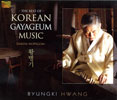
The Best of Korean Gayageum Music The gayageum is a Korean table zither with movable bridges, an instrument which originated in China. The gayageum is made from a piece in paulownia on which is set 12 silk strings. The musician generally sits on the floor and lay down the instrument on his laps. The strings are plucked with the fingers of the right hand (except the small finger). The musician can press the string with his left hand, on the left handside of the bidges; the note can be raised near to a fourth. We can find different models of this instrument, including one with 21 strings. These strings, being loose, can create sonorities and melodies that can be very peaceful and meditative. With this CD we can discover an instrument that is nearly unknown in the West as well as the works of a great Korean musician and composer of the XXth century.
|
|
 La Scena Musicale December 2007 / January 2008 |
Madagascar, Imerina et Antrandroy To a large extent, Madagascar still has in the West a mystical aura. We do not hear much about it, as much about its history as its music which has not been as intensively studied as many other African musics. This CD was released in the Fall of 2007 by the Laboratoire de recherche sur les musiques du monde from the University of Montréal, and was edited by Monique Desroches, ethnomusicologist and director of the laboratory. In it, we have the chance to hear genres of music almost totally unkown in the West, i.e. the music from the High-Plateaux of Antananarivo (Imerina) and from the region of Antandroy in the south of the island. We hear musicians who have never been recorded, but we especially hear unique musics that shows the imagination and creativity of the human spirit. Alongside a very well documented booklet, the CD including an interactive content accessible as much on a PC as on a MAC.
|
|
February 2008 |
||
 La Scena Musicale February 2008 |
Contemporary & Traditional chinese music The Silk String Quartet is a Chinese traditional music ensemble now based in England. It comprises an erhu (2-string fiddle), a yangchin (dulcimer), a pipa (lute) and a guzheng (table zither, an instrument I presented in my article of the December 2007/January 2008 issue of La Scena Musicale). These four excellent musicians have been trained in major conservatories of music in China, but they have also studies in the West, especially ethnomusicology. They want to promote Chinese traditional music but as well, they want it to evolve. They present original and contemporary arrangements of traditionals works, as well as contemporary works written for them. One of the main interests of this CD is that these arrangements and these new works are not some kind of imitation of Western styles of arrangements, but works that maintain a character which I think is typically Chinese. A very good example of musicians who offer us a music which evolves without loosing sight of its traditions. |
|
 La Scena Musicale February 2008 |
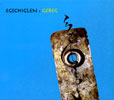
Gereg The well-known Mongolian group Egschiglen just released its 5th CD the theme of which is identity, i.e. the identity of musicians who belong to a nomad culture which is somewhat slowly disappearing. The number of nomads in Mongolia is diminishing. As the musicians tell us in the b ooklet, mountains, rivers, the Earth, wind, show, this majestuous wide open spaces are music to the Mongolian ears. For them, they do not sing about nature and their love of it, but more precisely they sing with nature. The khöömii, the Mongolian throat-siging, seems to be their way to communicate and sing with nature, one which is, for them, deeply spiritual. The title of the CD, « Gereg », refers to the name of a identification used at the time of Gengis Khan. Here, the gereg represents the passport for their music, a music which is evolving, and which is part of contemporary live, although it is still profoundly traditional. |
|
March 2008 |
||
 La Scena Musicale March 2008 |
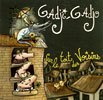
Sur le toit des voisins I am wondering if there would not be a kind of love story between the music of gypsy and klezmer origins and Quebec musicians? Gadji-Gadjo, as well as numerous similar groups in Quebec, seems to corroborate the allegation. Gadji-Gadjo draws its inspiration in klezmer and gypsy from East of Europe, two groups of people for which the whole Earth is, in a way of speaking, their "country", and which leave their mark everywhere they settle. Roma, or Gypsy music, is generally described as being one of festivities. I would rather suggest that it is a music composed to be shared first of all. For a group like Gadji-Gadjo to express so well the gypsy and the klezmer spirit, there had to be some kind of sharing of spirit. |
|
April 2008 |
||
|
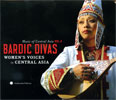
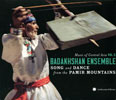
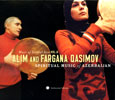
Music of Central Asia In 2007, the well-known American label, Smithsonian Folkways, released 3 news CD-DVD of its superb series Music of Central Asia. This series proposed double albums containing both a CD and a DVD (which last 24 minutes). Each of these releases is dedicated to the music or musicians of a particular region of Central Asia. This vast region which lays between Russia in the North and Middle East in the South was central to the famous Silk road which extended from China (including Korea and Japan) all the way to East of Europoe. For around 1,500 years (up until the 15th centur), that region was a major commerce as well as a major cultural and artistic routes. Because for most of the XXth century, Central Asia was under the Soviet control. it still remains quite unknown in the West, although we hear more and more about these countries, in particular since the beginning of the 90s. The volume 4 of this series presents us the great tradition of bards, a long tradition still alive today. But the most interesting point to note is that many of these bards were women. For its part, we can hear in volume 5 the music of the Badakshan region. The Badakshan is a people of Persian origins who live in a region shared by Tadjikistan andnorth of Afghanistan. Their music is as unique as their culture. Finally, volume 6 presents 2 musicians from Azerbaidjan and their performance of the great Azeri muqams. Each volume is accompagnied by a well-documented booklet. Peoples that deserve to be known and respected. |
|
May 2008 |
||
|
Gong Linna If someone ask me what would be my main discovery of the last 12 months in World Music, my answer is right way this CD of this amazing chinese singer Gong Linna. Trained in traditional music at the Beijing Central Conservatory of Music, she has been soloist for the major Chinese traditional orchestra. She travelled all around China to learn traditionial songs coming from diverse ethnic minorities. Many of these songs are still sung in the fields, at work, at home, etc. Gong Linna has an amazing mastery of her voice. She can sing with a moving softness, and then sing with a powerful rumbling voice, like a "dragon spitting fire." The contrast between both types of voices coming from a so small lady is absolutely astounding. She is being accompagnied by traditional as well as Western music instruments. However, the excellent arrangements support very well the songs and her voice. A real discovery! |
|
 TSM Web Site May 2008 |
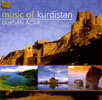
Dusan Acar Kurdish music is not that known in the West. It must be said that Kurdish do not have their own country. The region they occupy is split between Turkey, Irak, syria and Armenia. In fact, they never really had a country they can call their own. Yet, they were able to strongly maintain an identity that distinguish them, an identity that was able to remain unaffected by Islam. The Kurdish also have a age-old bardic tradition. Dursan Acar is of Turkish origin; he now resides in Australia. He plays the boglama, a long-necked lute very popular in Turkey. He is known as one of today's best Kurdish bards. The songs he proposes usually accompanied danses, processes and religious rituals. We can hear on Darsan Acar's CD typically traditional songs, as well as some contemporary songs which show that this traditionnel is still well alive today.
|
|
June 2008 |
||
 La Scena Musicale |
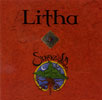
Skarazula Following up on their first outstanding CD Ostara, which was celebrating the Spring solstice and the rebirth of nature after a long Winter, the French Canadian mediaeval trio Skarazula presens us Litha, which celebrates the Summer solstice and the new harvests which brings life, thus inciting everyone to celebrate it. The trio offers us songs, dances coming from the Mediteranean region, but especially from Spain. Alongside typical mediaeval musical instruments, we can hear the ud, the Bulgarian kaval, oriental percussions and more. In full respect of the styles of mediaeval music, we hear colourful arrangements. Many instruments used in this CD were not used in the previous, giving the listeners a different listening experience. I am impatiently waiting for the next two CD which will celebrate the Fall and Winter solstices. www.skarazula.com |
|
 La Scena Musicale |
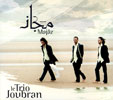
The Joubran Trio This new CD by these Palestinian brother shows us, one more time, their amazing talent, but especially, the outstanding musicality of this family of musicians whose father is an ud maker. These musiciens are able to transcend the adversity that their country is going through to offer us a music full of serenity, equanimity et, at times, meditative and introspective. To a certain extent, the music as such of this CD is similar to the previous one, in which the sound of the ud is simply enthralling. The melodies, simple at the start, are built brick by brick, as if building a castle. The main difference from the previous CD is beautiful song. But, when one goes beyond the music itself and pay attention to the beauty of that music, its purity can leave no one indifferent. |
|
July-August 2008 |
||
 La Scena Musicale July-August 2008 |
Ensemble Gaguik Mouradian Goussan is the name given to the Armenian itinerant Bards, these troubadours and poets that are found all around Central Asia. This bardic tradition appeared in the Middle Ages, singing romantic and spiritual love, as well as philosophy and spirituality. During the Soviet era, the Armenian bards ended up teaching in music conservatory where they were forced to teach their musical and poetic tradition according to well-defined political canons, thus repressing any freedom of expression as was usual for these musicians. Gaguik Mouradian, a kamantcha player, a fiddle of Persian origin, is a modern bard who bring that great armenian tradition back to life in all its splendor, while adapting it to our modern life. His ensemble includes a kanon (a plucked-stringed zither), percussions, an ud and a saz (a 2-stringed luth), a shvi (a wood flute) and a duduk (the well-known Armenian doubled-reed oboe. A music of the soul!
|
|
September 2008 |
||
 La Scena Musicale September 2008 |
Sagapool Well-known Montreal gypsy group Manouche changed its name lately for Sagapool. This new name was revealed during the launch of their third CD. The reason behind this change is due to the fact that the manouche music generally refers to Django Reinhardt style of jazz, while Sagapool performs a style of music that is mainly inspired by the music of Eastern Europe. Morever, Sagapool style is more reminiscent of Bratsch's eclectic style than anything else. This new released by this excellent group present solely original pieces, which shows klezmer, manouche, jazz and many other influences. As with their two previous CD, we are in for celebrations with a most lively music, or should I say a music which celebrates and expresses life in all its joy. Their music is like a drug: hard to get rid of it.
|
|
 La Scena Musicale September 2008 |
Aveladeen In this third CD, Aveladeen, an Celtic music group from Quebec, dedicate their music to the Celtic god Belenos, a solar god in the Celtic mythology. It is with this theme in mind that these three accomplished musicians offer us arrangements of traditionals pieces as well as original pieces written in the Celtic spirit, while showing influences from jazz and blues. As with their two previous CD, we cannot remain indifférent to the quality of their arrangements . We hear Irish flutes, the Irish uilliann pipe, as well as the Spanish gaita, the Irish bouzouki, the dobro, and many more eclectic instruments, thus widening the scope and aesthetic of Celtic music, which ha sto be viewed today as a World heritage music. Among their guests, we hear the warm voices of Jessica Vigneault and Michel Payer, as well Bernard Ouellette on percussion and Alan Jones Northernbrian pipe. |
|
October 2008 |
||
 La Scena Musicale October 2008 |
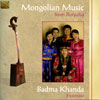
Badma Khanda Ensemble Buryatia is a region of Siberia situated east of Lake Baikal and north of Mongolia. It is today member of the Russian Federation. At the beginning fo the 20th century, a large number of Buryats escaped the communist regime fo the Soviet Union to settled in Inner Mongolia in the north of China. This allowed them to maintain and safegard their culture and their traditions. Buryat songs, which disappeared in Buryatia because of the Soviet repression, have been preserved by these uprooted group. Mongolian Buryat singer Badma Khanda has become an ambassador of that music which is almost unknown in the West although she performed at the Carnegie Hall in New York. We hear throat-singing on the CD, a type of singing which originated in Mongolia. The instruments used are also mainly of Mongolian origins and the sonorities show an influence of that country's music. Yet, we hear a music which reaches straight to the heart.
|
|
 La Scena Musicale October 2008 |
Sacred Music of India In April of 2000 was held in Bangalore, India, the Global Event of the World Festival of Sacred Music. That festival was organized by the House of Tibet in New Delhi, a cultural center supervised by the Dalai Lama. This CD, which was launched in 2007, presents different genres of sacred music of that country with a thousand faces that India is. In the West, we have the unfortunate habit of defining a whole country under a single term. When it comes to India (and most other cultures, of course), this is totally impossible as much because of the wide cultural and religious diversity of the country, as well as the wide diversity of music. We can hear in this excellent CD just a glimpse of the musical diversity of India's sacred music. We hear karnatic music from sound of India, songs from Rajasthan in the north or from Sri Lanka, or songs from religious groups almost unkown in the West. A musical journey in the heart of India's spiritualité.
|
|
Books Reviews |
||
|
||
November 2007 .. |
||
 La Scena Musicale November 2007 |
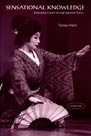
Sensational Knowledge, Embodying Culture through Japanese Dance Since the beginning of the 1990s, a number of books have been published on the topic of "embodiement" in reference to the way a culture or an art such as dance are embodied, i.e. how the body learns how to express them. So far, very few books have been discussing the learning of music and dance from that point of view, though the learning of the body is vital if one wants to become a good musician or a good dancer. In the West, the teaching of theory has precedence over everything else, even to a point of ignoring and denigrating at times the body without which the learning of music and dance would not be possible. This book by ethnomusicologist Tomie Hahn wishes to fill in that loophole by presenting how the learning of a Japanese traditional is learned through the bod and the senses. The learning of any Japanese traditional arts is possible through imitation, repetitions, and this, intuitively: theory and practice are not distinguished and segregated as in the West. One is dependent upon the other. Tomie Han wishes to show that the body and our senses play a more preminent than is generally acknowledged. The book is accomopanied by a DVD of examples of classes. |
|
 TMS Web Site November 2007 |
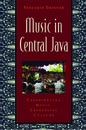
Music in Central Java This book is the latest in a series of ethnomucilogy books published by reknowed academic publisher Oxford Academy Press. The series, which is titled “Experiencing Music, Expressing Culture, » aims at presenting traditionnal music of some of the greatest musical cultures of the world, in this case the music of Central Java, in Indonesia. One of the main objectives is to put that music into today’s context, i.e. how it is able to maintain itself and evolve while facing enormous political, cultural and economic pressures in the 21st century. I previously presented 2 other books of that excellent series: on Japanese music and on Bulgarian music. Each of these books is accompanied by CD full of musical examples, to which are related numerous exercises presented in the book. The author, Benjamin Brinner, is a specialist of Javanese music. We learn about some of the technical, theorical and historical aspects of that superb music and this, in reference to his contact, his own personal playing and his interviews with major Javanese musicians. This book is probably more suited to music students or music connoisseurs, but will surely attract everyone who wishes to get more than a simply journalistic account of what makes this music so enticing. |
|
|
|
||
March 2008 .. |
||
 La Scena Musicale March 2008 |
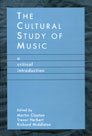
The Cultural Study of Music Although this book was initially published in 2003, this third released is indicative of the importance of the issues it raises, issues that are still important today in academia, especially in musicology. One of the underlying motto of musicology is the following: art for art's sake, meaning that art, thus music, is self-sufficient, it exists outside society, culture, and even time. This book shows that it is not exactly the case. Music can not exist outside of the society and the culture that give it life. Music needs a social, cultural, historic and even political context to make it what it is. It is dependent on it. Western classical music would not be what it is today, with its "aura" of refine music, without Europe and its history, or if it would have been created in a different region of the World, for example. The book contains 26 chapters from sociologists, historians, ethnomusicologist and, of course, musicologists. The diversity of the issues discussent clearly show that music is a phenomenon in human societies that can not reduce to a single and unique way to study it. |
|
|
|
||
May 2008 .. |
||
 La Scena Musicale May 2008 |
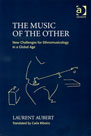
Laurent Aubert This release is the English translation of a book initially released in French: La musique de l'autre : les nouveaux défis de l'ethnomusicologie (Ateliers d’ethonomusicologie, Genève, Suisse, 2001, 160 p. ISBN 2825707392). I learned about this book through its English translation. If that book has been translated in English, it is indicative of its very pertinent understanding of World Music, both as a social as well as an ethnomusicological phenomenon. In fact, Laurent Aubert is one of the rare ethnomusicologist who seriously and intensively studies World Music and its current evolution. He gives us a quite accurate portrait of the impact, role and meaning of the social phenomanon, as much for the fans as for the musicians themselves. He discusses such notions as multiculturality, authenticity, identity, tradition, modern traditions, performance, as well as the listening habits and behaviours of the fans of these musics. An excellent book that put World Music into perspective!
|
|
July-August 2008 .. |
||
 La Scena Musicale July-August 2008 |
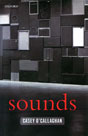
Casey O’Callaghan The everyday sounds that we hear all around are odinarily conceived as being composed of two dimensions: a physical one (the sound itself) and a physiological one: our ears perceive the physical sounds. According to O'Callaghan, the author of this newly published book, studies in auditory perception are done based on method of studies issued from visual perception studies while both types of perception cannot be studied from the same point of view. O'Callaghan propose une new way to understand sound: it shoudl be conceived as an event which can only occur with both the physical and physiological aspects meet together, one being dependent on the other. A sound is not the addition of a timbre, a frequency, a dynamic, etc., but an event in which we can discern a timbre, a frequency and a dynamic. His approach is basically phemenological, which gives, I think, a much better undersanding of waht a sound is for us. I have one critic to make, however: he does not talk about music; although he brings a new understanding of auditory perception, in its current status, I doubt his theory can be applied to the auditory perception of music.
|
|
Septembre 2008 .. |
||
 La Scena Musicale September 2008 |
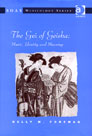
Kelly M. Foreman The Japanese Geisha has been attracting a lot of attention lately, especially following up on Arthur Golden's book and the ensuing film, but as well following up on the numerous documentaries that specialty channels are presenting on this particular profession. This book by American ethnomusicologist Kelly M. Foreman presents us a Geisha that is first of all an artist who trade is extremely demanding. The musical training of the Geisha is long, tedious and extremely expensive. In fact, the syllable "gei" in the word Geisha means "art". Yet, still today, the Geisha is still perceived as a kind of prostitute for the rich and that music playes a secondary role. This myth, which came out during the American occupation after WWII (real prostitute were presenting themselves as Geisha when they were not), is now so fixed into our Western mind, if not our collective unconscious, that many people refuse to believe that it could be otherwise, considering this myth as the truth of their trade. For Foreman, Arthur Golden's book is a typical presenting of that myth of ours. She shows us a woman and a trade that is so demanding and expensive that, in fact, the geisha does not have much time for frivolous encounters. Besides, because their trade takes place in tearooms, that is in a context where there is some kind of intimacy, for our Christian Western mind, this instantly means promiscuity. The reason why they are doing their work in such places is that the shogun forbid women to go on stage, forcing them, thus, to exercise their profession in this kind of more private venues. Yet, these artists in many ways are much more professional, knows more about music than most Kabuki musicians, for example. This book tries to show us a craft that is extremely demanding. However, one thing that does not help into breaking this myth is the price of this book: $120. This considerably limits the opportunity for many people to read this book and really about what it is to be a Geisiha.
|
|
Links to World Music Web Sites |
||
Maison des cultures du monde, Paris • In English • In French This Parisian cultural center organises a Spring Festival, manage the INÉDIT CD label (one of the best World Music label), as well as a concert hall. They also publish books on World Music. |
||
Mondomix • In English • In French • In Spanish A French web site on World Music and musicians of all kinds. They sell MP3 files of World Music for 99¢ US. |
||
| The British Library Sound Archives Surely the best sound archive of World Musics available on the Internet. |
||
Smithsonian Folkways Recordings • Smithsonian Global Sound One of the best CD labels of World Music. On GlobalSound, they sell the pieces from all their records at 99¢ US a piece. |
||
| Soundtrack of the World • National Geographic A new site on World Music from National Georaphic. We can buy and download pieces. |
||
WOMAD Womad stands for World of Musics, Arts and Dance. It is a non-profit organization. They organize festivals. |
||
Cité de la musique, Paris • In French • In English Musée des instruments de musique de Bruxelles |
||
The European Forum of Worldwide Music Festivals (EFWMF) A European organization of World Music Festivals. They are the organizers of WOMEX expo and STRICTLY MUNDIAL, a networking event for World Music musicians. |
||
| World Music Central • World Music Network • World Music Institute Three excellent sites on World Music. |
||
| Culture.ca • In English • In French A Web site on the Canadian culture, including a list of festivals from all around Canada. |
||
| Virtual Instruments Museum A virtual museum on the Internet on musical instruments. |
||
| Web Sites of stores where you can buy World Music Instruments Lark in the Morning World Musical Instruments Shakuhachi.com Twigg Music, in Montréal |
||
| Silk Road Project Yo-Yo Ma's World music project. |
||